


For several days in March, Nairobi – Kenya’s capital and largest city — was suddenly plunged into ‘Day Zero’. No municipal water flowed through the pipes in a city that is already facing an acute water crisis and whose name means ‘the place of cool waters’.
In newspaper notices one day before the shutdown, the Nairobi Water and Sewerage Company (the city county government agency charged with supplying clean and safe drinking water to residents) warned that there would be no water for two days.
“A major leakage on the raw water pipeline will necessitate the complete shutdown of the Ngethu Water Treatment Plant starting 6.00am Thursday 10th March to 6.00pm Friday 11th March,” the notice read.
Two days of no water for residents of the wider Nairobi metropolitan area, who were already receiving less than they needed or not getting any at all. Yet, most city residents received the news with a mix of bad feelings: Disappointed that it was happening again, helpless because they could really do nothing about it and surrender to what has become a norm. Municipal supply of water had been very unreliable for decades. Most residents had been forced to find alternative sources to live on.
“So what? We haven’t had water for four weeks in Mt View so shutdown (sic) or not doesn’t change our situation,” Peter Warutere, a resident, tweeted in response to the shutdown notice.
⎯ A daily hustle ⎯
To understand how dire the water situation in Nairobi is, I talked to two families – one from a low income neighborhood and the other from an upper-middle class area – and tracked their water usage. I trailed a handcart water vendor and accessed a wealthy neighborhood’s WhatsApp group chats in which residents aired their frustrations on lack of water. I collected samples of borehole water from different parts of the city and had them tested in a chemical laboratory for safety.
They all pointed to one thing: no matter where you live in Nairobi, and no matter the number of commas in your bank statement, access to clean and safe drinking water is a problem that you just have to live with.
When it comes to getting clean and safe water in Nairobi, the rich may cry. But it is the poor that suffer most.
In Kibra, a low-income neighborhood just six miles outside the city center, access to water for domestic use is a daily hustle for most households. Here residents, mostly women, queue at neighborhood water kiosks to fill and ferry 20-liter containers on their heads.
In Syokimau, a sprawling upper-middle class neighborhood near the country’s busiest international airport, salty borehole water is what most residents have access to. It is delivered to their houses through water tankers, hand carts or directly through private networks of pipelines – at a steep price.
In Kileleshwa, a posh neighborhood near the country’s presidential seat of power and where rent for two-bedroom apartments can go as high as $1,500, residents living on one side of a road go for as long as two weeks without tap water even as their neighbors on the other side never lack.
Municipal water, known to be cheap, safe and of a higher quality, has become some sort of a great equalizer – it discriminates against no social status, income levels or political persuasions. Its availability, access and usage magnify the deep inequalities that exist in Nairobi.
Wealthy residents – those that live in posh neighborhoods characterized by clean sidewalks, green tree canopies and signage on their front gates warning of fierce dogs, electric razor fences and trained security guards — also complain of unequal access to water.
With a growing population of four and half million people, Nairobi is facing a water crisis that is getting worse by the year. The Nairobi Water and Sewerage Company says it can only supply 526,000 cubic meters out of a daily demand of 810,000. This amount, according to the agency, reaches 76 percent of the city’s population.
"The water infrastructure currently in place was meant to serve the city until the year 2000.”
Nahashon Muguna
This problem could be worse than the water agency is admitting. Fifty percent of the city’s residents have no access to piped water. Those whose homes are connected to the city’s water network have to endure days, sometimes weeks, without the commodity. In the city’s very populous Eastlands area, some housing communities only receive water for a few hours every week, if they are lucky. Here, every drop counts.
The problem can be attributed to many factors. Rivers that supply the city are either drying up or their volumes have gradually decreased over the years. Supply to Ndakaini Dam, the reservoir that supplies the city with 84 percent of its water, has been greatly reduced. By 2018, the dam was holding 70 per cent of its full capacity. Its levels have been dropping ever since.
Ruiru and Susumua dams, the two other reservoirs that supply the city, are also experiencing reduced capacities due to drying up of rivers that supply them. Making matters worse: Nairobi’s rapidly growing population is dependent on infrastructure that was built decades ago.
“The water infrastructure currently in place was meant to serve the city until the year 2000. Plans put in place to give more water to the city never took off,” Nahashon Muguna, the Nairobi Water and Sewerage Company managing director told a TV station last year.
Due to the shortage, the agency has had to scale back the volume of water it supplies to some areas of the city, especially middle class and poor neighborhoods. The agency calls thisarrangement its ‘equitable water distribution program’. Its website offers no data on how much water is supplied every day.
But this equitable distribution program has been criticized as favoring some sparsely populated neighborhoods at the expense of more deserving ones. While the upmarket Kilimani area gets water for four days from Thursday to Monday, for instance, the populous and poor areas of Kayole receive their share for only 15 hours on Wednesday night. But residents of Kilimani say they too are suffering, and that they seldom get water on the days Nairobi Water says they should.
The shutdown in March marked the beginning of a predicament that would take weeks to resolve. Most parts of the city still hadn’t received the little supply due to them more than two weeks after the shutdown.
To meet daily demands occasioned by the crisis, the majority of city residents – poor and rich – have to buy water from either handcart vendors, refilling shops, water trucks or from connections that supply cheap and reliable but salty borehole water. The difference between households is how much of their monthly income they allocate to buying water, and how the resource is used.
⎯ The balancing act: Every drop counts. ⎯
For the 10 years Caren Auma has lived in Kibra’s Ayani area, she has always had to buy water in 20-liter containers. Hers is the kind of house that may never get to have piped water – a makeshift structure whose walls and roof are made of iron-sheets. It stands behind a two-storey apartment, and to access it, one has to squeeze through a narrow metallic gate and manovre through a rough pathway of red earth and remnants of what used to be a pavement.
Outside Caren’s house stand two 200-liter water storage tanks, their black and blue colors fading away to years of standing in the heat of the unforgiving Nairobi sun. To get into the house, one has to go through a white grill door to an open air room that looks like a verandah but which serves as a makeshift storeroom. This room holds yet more 20-liter yellow water containers, 15 of them piled on top of one another, signs that this household – like many others all over the city – has to fetch and preserve its water. This is part of life in this densely populated area of the city.

It is part of life in most of Nairobi.
“I have lived all my adult life buying water in 20-liter containers,” Caren says.
Located around six miles from Nairobi’s downtown, Kibra is a populous sub-county with 185,777 residents – 61,690 mostly low-income households. Only 11 per cent of Kibra residents have direct access to water piped into their dwellings, according to the 2019 Kenya Population and Housing Census. 20.6 percent depend on water piped into one central location in their neighborhood, from which they line up to fetch as much as they need and can afford. The rest depend on water vendors. Sometimes, a water truck from the County Government of Nairobi will be dispatched to specific areas to distribute water.
Caren gets most of her water from the nearby Ayani primary school, from where the county government has put up a reservoir and a kiosk for residents of the neighborhood to buy water from. Every mid-morning, she walks 500 meters from her house to the water kiosk with five yellow 20-liter containers. Each one of them costs five cents to refill.
Outside Caren’s house stand two 200-liter water storage tanks, their black and blue colors fading away to years of standing in the heat of the unforgiving Nairobi sun. To get into the house, one has to go through a white grill door to an open air room that looks like a verandah but which serves as a makeshift storeroom. This room holds yet more 20-liter yellow water containers, 15 of them piled on top of one another, signs that this household – like many others all over the city – has to fetch and preserve its water. This is part of life in this densely populated area of the city.
Caren Auma talks about her daily struggle to get water.
As water becomes scarcer, the costs keep rising.
“It is an energy-sapping task and I can only make five trips,” she says.
A single mother of four who makes a living through hawking second-hand shoes in the neighborhood, water is the single highest expenditure in Caren’s household. At an average of $3 every day, it costs her more than food.
Most of the water she buys is used for cleaning – bathing, laundry, dishes and general home hygiene. As in almost all other households across Nairobi, Caren hand-washes her family’s clothes. This chore consumes between 60 and 100 liters of water every time. Caren does laundry three times every week.
She does not trust the quality of the water she gets from the kiosk. She prefers that her family does not drink from it, although she uses it to cook. So she occasionally buys bottled dispenser water at $3 per 10-liter bottle. To cut on costs, she collects rainwater from the roof during the wet seasons, for which she uses to clean.
The rising costs: Clean water for who?
A blue tanker with the words ‘CLEAN WATER’ inscribed on its sides pulls up at Ann Chelagat’s house. Her family has been waiting for it for two days since their reserve tanks ran out.
“It was worth the wait. This is a new supplier that was referred to me by a friend. We were expecting it yesterday and it did not come. It has fresh, treated water, not the borehole supply that we normally get,” she says.
The tanker is holding 12,000 liters of water, almost enough to fill two of Ann’s biggest reserve tanks and meet her household’s needs for close to three weeks. Anne’s storage tanks can hold up to 14,000 liters of water. Her household uses at least 500 liters per day. It needs much more.
An insurance professional in her mid 50s, Ann is the family head of a household of seven. She lives in a one-story four-bedroom five-bathroom modern maisonette standing on half-acre complete with a lush green vegetable garden. This is her dream house. She built and moved into it in 2014. Back then, she had an irregular but almost sufficient supply of municipal water from the Mavoko Water and Sewerage Company, another government agency that supplies this part of the Nairobi metropolitan area. She never had to buy water, only pay her monthly bill to the agency.
“It was mint, fresh running water from the municipal,” she says.
The supply grew erratic as the years went by and many other people moved to the area. Then it suddenly stopped in 2018.
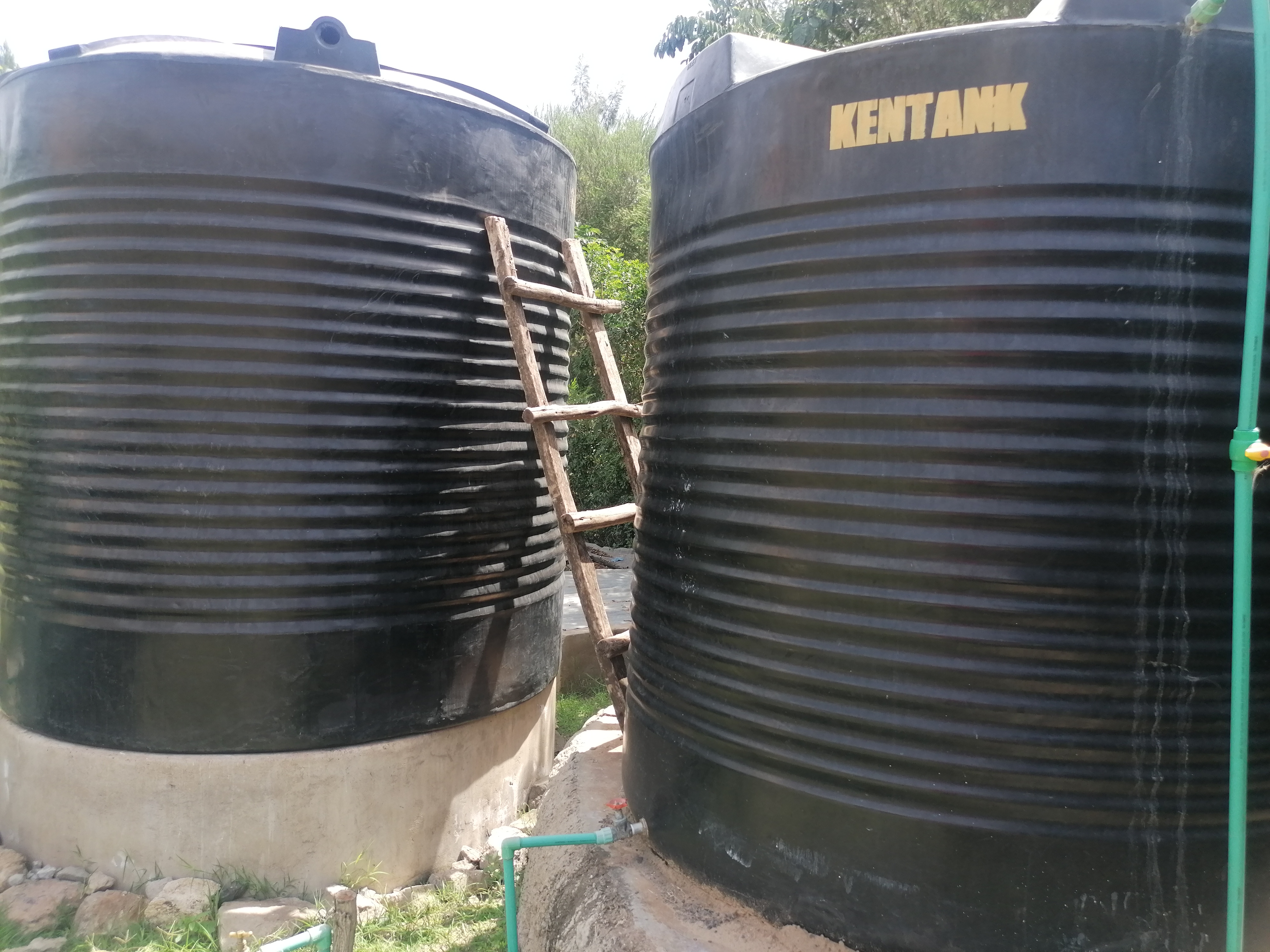
Ann’s storage tanks can hold as much as 14,000 liters when full, enough to last her household at least three weeks
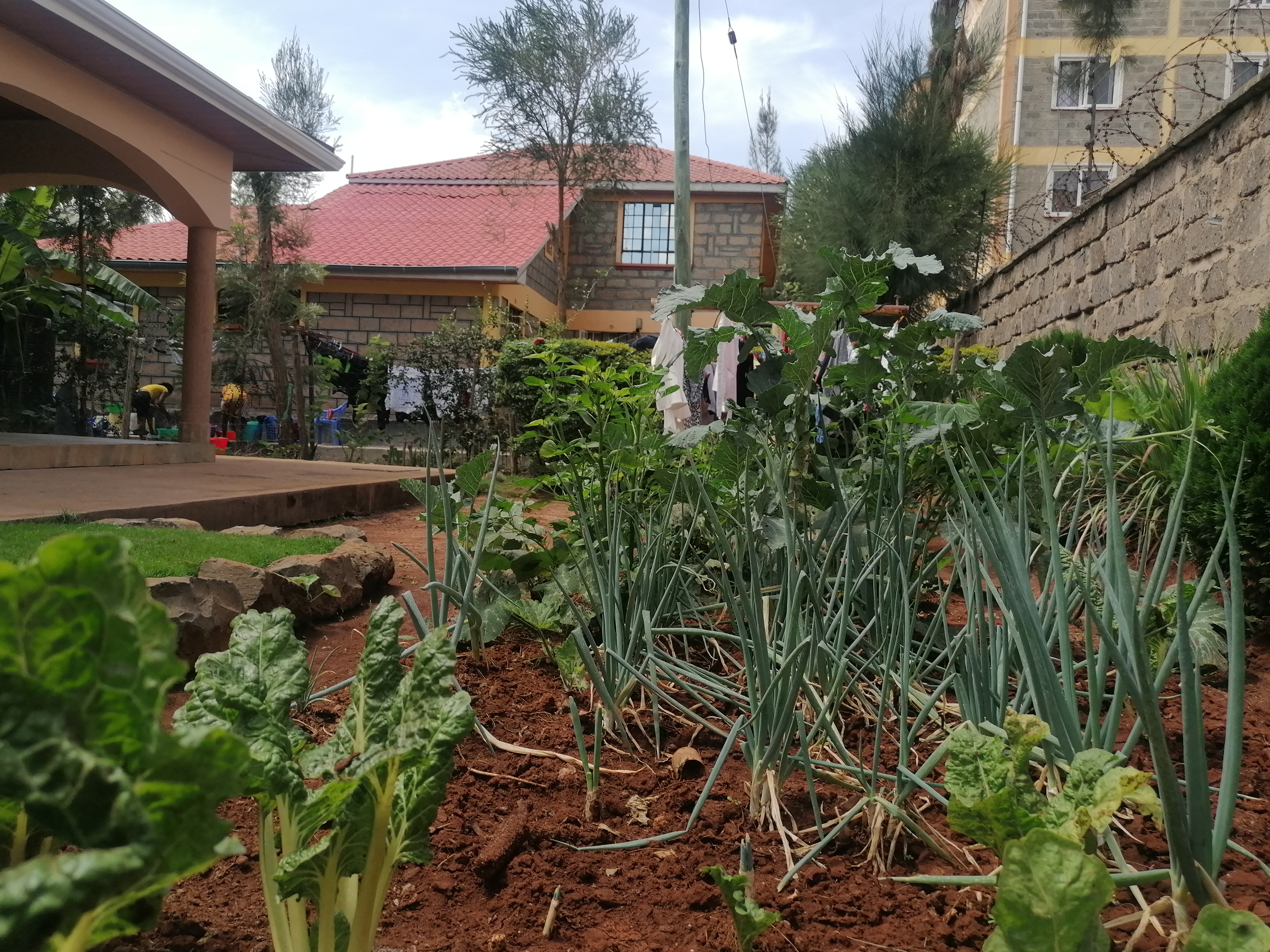
Her small vegetable garden needs watering every two to three days and consumes a significant amount of water
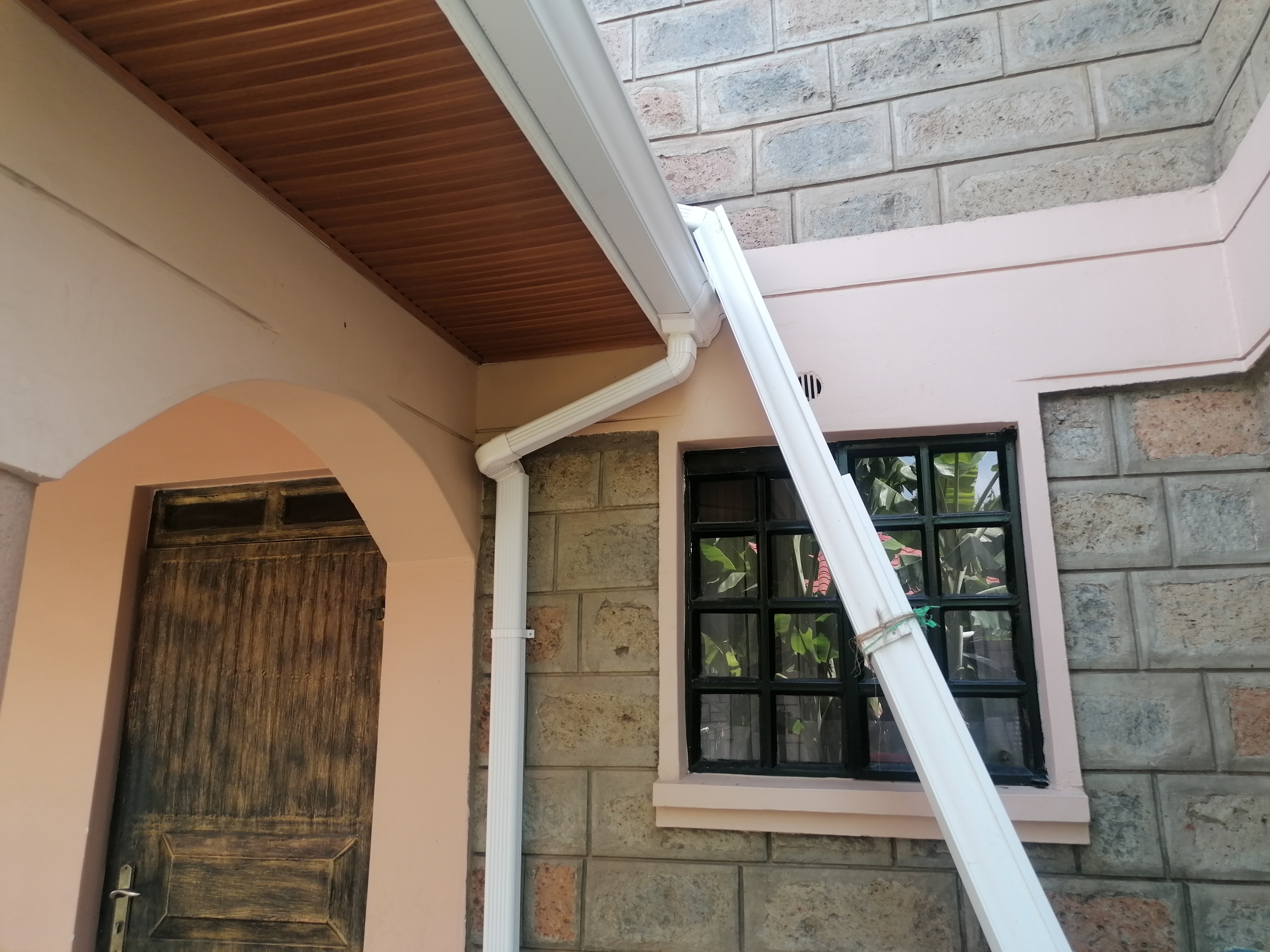
To reduce her monthly costs of water, Ann collects rainwater and plans to build an underground storage tank to preserve more
When the water agency ceased pumping to the area, everyone resorted to buying either from the water tankers that line the main road leading to her neighborhood, or from hand-cart pushers depending on their needs. Ann finds it cost effective to buy in bulk from water trucks, which would refill her 8,000 and 5,000-liter tanks in one go. This water is then pumped to two other 1,000-liter reserve tanks on the roof of the house. From there it flows to the taps and sinks below.
She spends at least $75 every three weeks to refill her tanks. In addition, she buys dispenser water at $30 every month. Her monthly water budget exceeds $100, four times what it was when she had a reliable municipal supply.
“The costs just keep rising,” she says.
Ann worries about the safety of the water and how the people she buys from handle it at the source. Besides being unsafe to drink, borehole water smells odd, corrodes shower heads and leaves dishes discolored. Her household’s biggest water needs come from bathing, flushing of toilets, cleaning dishes and laundry.
“We also have a garden, and that means that three or four times a week, we have to water it when it is not raining,” she says.
Last year, she installed gutters around her house to harvest rainwater, and she is planning to construct an underground tank to store more. “This will drastically cut down the cost and amount of water we need to buy. The cost of putting up underground water storage is however very high, but it is money that I would rather spend,” she says.
In 2018, local authorities said they were constructing a reservoir that would ensure a steady supply of clean water to her neighborhood. The construction is complete, but Anne does not know when their supply will return. “Our hope is that once all the technicalities are done away with, we will get our fresh water back,” she says.
Until then, she will continue buying from trucks whose water she does not really trust.
Over the last few years, residents of Kileleshwa have found themselves complaining about the same issues as the Nairobians living in densely populated neighborhoods to the east and south of the city: noisy public transport vehicles, insecurity, endless traffic snarl ups, dilapidated infrastructure and dysfunctional public amenities.
And insufficient water.
What was once the choice neighborhood for Kenya’s top civil servants, well-to-do corporate leaders and business people, this residential area that is less than 10 minutes drive from downtown Nairobi has undergone a tremendous transformation.
A rezoning in 2014 opened the area to high rise apartments. In just a few years, multi-storey complexes went up where single dwelling units had stood for decades. Thus, a formerly posh neighborhood was opened to Kenya’s new money, and a low density area suddenly had more people.
In just a few years, Kileleshwa lost its appeal, its shine and privacy. It became congested by a rising middle class.
With the increased population came problems. Public amenities and infrastructure were suddenly put under pressure. Municipal water, which for many decades had been flowing to houses everyday, became less and less. Like many parts of the city, supply was first cut to four days a week, then to three. Now, some parts of this neighborhood have no idea when to expect a supply.
But it is in this neighborhood that the disparities in access to water, even within the same area, manifests openly. In a WhatsApp group, residents openly complain about insufficient supply; others say they have never gone without water.
Houses that lie on the pipeline that supplies the Presidential State House never lack. Those that lie further out have to contend with irregular water days characterized by short supplies and little trickles.
Like most other parts of Nairobi, borehole water is increasingly becoming the only alternative to municipal water. Here, too, property owners need to sink their own boreholes, with government approvals.
The discoloration in his six-year-old daughter’s once milky-white teeth did not bother him when he first noticed it. She wasn’t cleaning her teeth well, he thought, and the browning would soon brush away. But it got worse even with constant brushing, and he started to worry that her teeth would be permanently stained and her beautiful smile ruined.
When the brown color wouldn’t brush off, Daniel Wafula took her to a pediatrician where he learnt that the water his family was consuming was not safe to drink, and had been harming his children all along. Ayana had fluorosis, a result of using water with too much fluoride and salt.
“I could not understand why. We always refill the dispenser with purified drinking water from the supermarket. We also tell our daughters not to drink tap water,” he said.
Daniel, the quintessential Nairobi native, was born in 1980 to civil servants. He has spent most of his life in the city, growing up just over two miles from where he now lives. He remembers the Nairobi of the 80s and 90s. The streets were cleaner, less crowded and a pleasure to walk on. Everyone was friendly and people happily acknowledged greetings from random strangers. Garbage was collected and disposed of promptly. Burst sewer lines were fixed immediately. Nairobi was the green city in the sun. And Kenya was transitioning into a democracy.
“Most importantly, there was no water shortage. You could turn on the tap at any time and water would gush out with so much pressure,” he said. “You could safely drink straight from the tap”.
The realities are starkly different now. Life in the city is fast-paced and greetings from strangers are unwelcomed. Raw sewage floods the streets. Everyday, motorists spend hours stuck in traffic. Housing costs almost three times as much now as it did in the late 90s. The city’s population has grown to 4.9 million people up from 1.38 million in 1990.
And water has become a scarce commodity. The little available is not safe to drink.
For years, municipal water supply to the National Housing Corporation gated community Daniel lived in has been erratic. Water flows in for less than four hours, three days a week. This water is first stored in a central tank before it is pumped to smaller reservoirs on the roofs of the apartment blocks. Every house on the block has a reserve tank that can only hold 2,000 liters, barely enough to last until the next water day.
This is the water Daniel’s household and everyone else in their community uses to cook, brush and wash.
"This was a risk that I was no longer willing to put my family through.”
Martin Muthee
Boreholes are increasingly becoming the main source of water for residents of Nairobi, Kenya’s capital and biggest city. With a population of four and half million people and growing, Nairobi is facing a water crisis that is getting worse by the year.
There are 4,000 registered boreholes in Nairobi, according to the Water Resource Authority (WRA), the government agency charged with regulating the management and use of water resources.
These boreholes are mostly found in areas of the city that are not supplied by Nairobi Water and Sewerage Company and those that face acute shortages. Most of them are in middle class and poor neighborhoods that are the hardest hit by the water crisis.
But Nairobi’s ground water, research published in the Journal of Water Resources and Protection revealed, is highly contaminated and not safe for human consumption.
The study conducted by researchers from the Jomo Kenyatta University of Agriculture and Technology found that 100 per cent of borehole water in Umoja, a populous residential area east of Nairobi, was highly contaminated with fecal coliforms. It also found that 83 per cent of borehole water in this area had high acidic levels of up to 9.53 pH and dissolved oxygen of 5.08 milligrams per liter below the WHO recommended levels of 12.0 milligrams per liter.
Fecal coliforms in water cause abdominal pains and diarrhea, the third leading cause of death among children under five and which accounted for 500,000 deaths across the world in 2017, according to the Global Burden of Disease Collaborative Network, 2018. More than 80 percent of these deaths were attributed to contaminated drinking water.
Although the Journal of Water Resources and Protection did not check on the fluoride levels of borehole water, Mr Muguna said most areas in Nairobi’s populous Eastlands area have concentrations as high as 15 milligrams per liter. This is 11 milligrams per liter more than recommended World Health Organization (WHO) guidelines. The US Department of Health and Human Services (HHS) recommends 0.7 milligrams per liter as the optimal fluoride level in drinking water to prevent tooth decay. The Kenya Bureau of Standards recommends less than 1.5 milligrams.
To understand just how contaminated Nairobi’s water is, I collected samples of borehole tap water from four different parts of the city – Rongai, Kibra, Embakasi and Kileleshwa – and had them tested. To get results that would show a true reflection of the components of the water, staff at the Kenya Water Institute (Kewi) provided a short training on handling samples to be tested. Samples of water for microbial testing must be collected in sterilized bottles. A lot of care must be taken to prevent accidental contamination during its collection and transportation to the laboratory.
The tap’s nozzle must be thoroughly cleaned and allowed to run out at full pressure for a minute to drain any stagnant water. Once collected, the sterilized bottle must be correctly labeled and the sample delivered to the laboratory not later than six hours after collection.
From the four samples, only Kileleshwa's returned fluoride levels lower than WHO's, at 0.5 milligrams. Rongai, a populous area south west of the city center, turned out the highest at 7.9 milligrams per liter. Data obtained from a government testing agency showed that most boreholes from across Nairobi return significantly higher fluoroide levels.
Fluoride levels in tested water drawn from different boreholes in Nairobi.
⎯ Water days ⎯
The results confirmed what his daughter’s doctor had suspected. The water they were consuming had high levels of fluoride, the chemical content responsible for the discoloration of his daughter’s teeth.
Keen to avert more harm, and with no other source of water he could rely on, he was forced to install a purifier.
Most of his neighbors have purifiers, as do other city dwellers who can afford one.
In Nyayo Embakasi, a sprawling housing estate that is East and Central Africa’s largest gated community with 4,774 housing units, residents have had to adjust to getting water only twice every week.
The estate has five boreholes to supplement the amount received from the water agency. Here, as in Daniel’s housing community, water from the boreholes is mixed with the purified municipal water before it is distributed to residents. Here, the sample of water tested returned 4.9 milligrams of fluoride, three times over the WHO recommended levels.
Like Daniel, Martin Muthee, a father of three who lives in Nyayo Embakasi, was forced to buy a purifier when he realized that it was not enough to buy drinking water if his family was still using tap water to cook.
“Boiling borehole water only kills the bacteria, it does not reduce the fluoride levels. This was a risk that I was no longer willing to put my family through,” he says.

Daniel and Martin represent a small fraction of city residents who can afford to have their water tested. They represent an even smaller fraction of those who can invest in a water purifier in their homes. To install a domestic-size water purifier costs at least of $350, an amount that is a little too much for most city residents, most of whom live on a little more than a dollar a day. With a maintenance fee of up to $50 every six months, water purifiers are a luxury that only Nairobi’s middle class and well-to-do can afford.
As authorities grapple with a mounting crisis, most of Nairobi’s five million residents will continue relying on contaminated ground water for their domestic use. A controversial $300 million project known as the Nairobi Water Master Plan for Developing New Water Sources that was launched by the government in 2015 has stalled one year after its completion date. It was projected that upon completion, the World Bank funded project would supply the city with an additional 144,000 cubic meters of water daily.
In the meantime, the Nairobi County Government has resorted to supplying poor neighborhoods using water trucks. As the rivers that supply most of Nairobi’s water continue to lose their volumes, and with health authorities sounding a warning over the dangerous levels of chemicals in its ground water, the city may soon be grappling with a bigger crisis.