El Viaje Eterno
The Eternal Trip
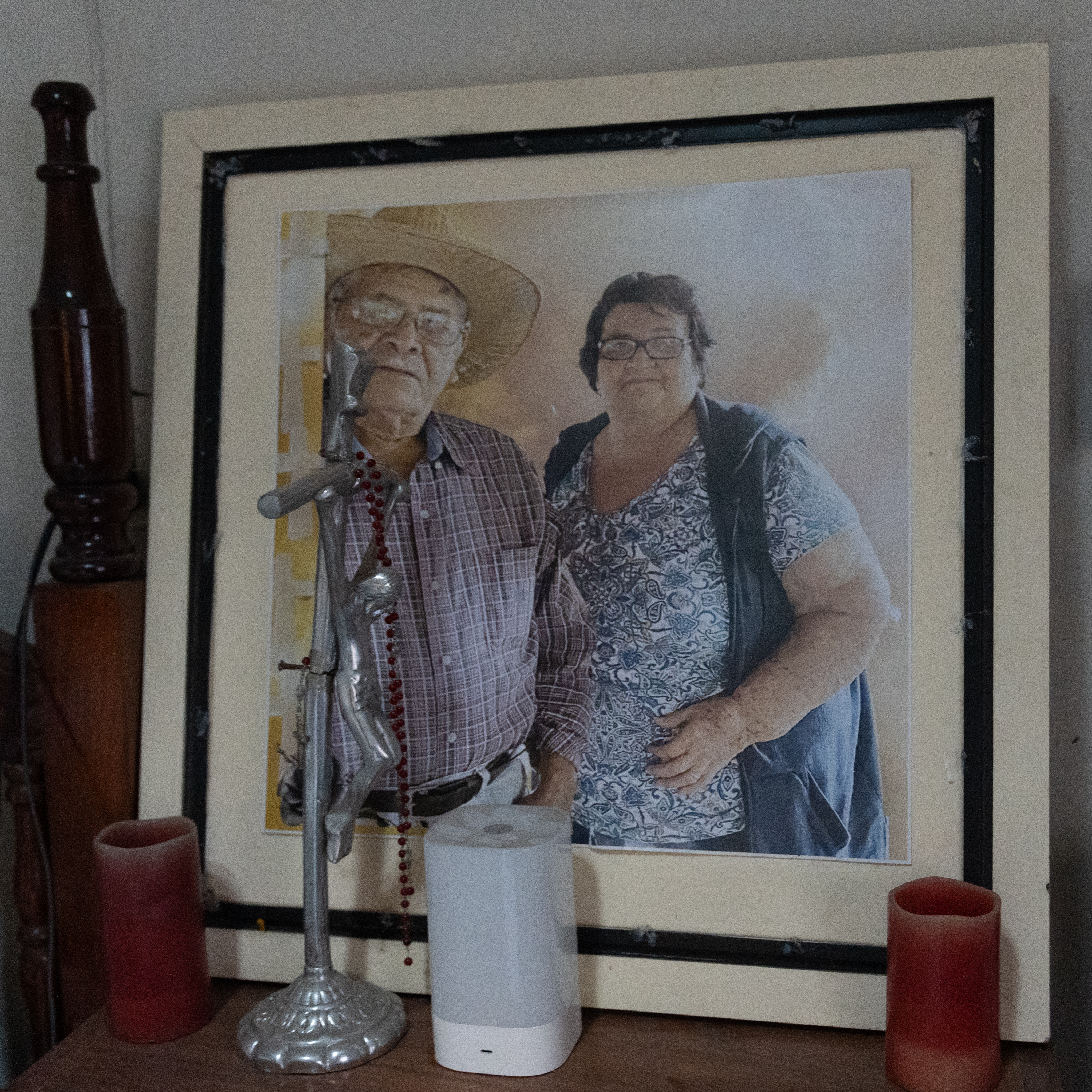
The oxygen monitor on Jose Jimenez’s, 82, hand started beeping late one night in December 2020. His blood oxygen was tanking. His daughter, Imelda, knew he would die without medical attention. COVID-19 ravaged across the Mexican countryside, limiting the number of hospital beds, so the family had to gamble which medical center would be able to accept their ailing father and quickly get him ready for the drive from the farmlands to the nearest major city.
"Everyone was crying and we didn't know what to do," said Imelda as she remembered how she called hospitals across the state. "We put my papa into the car and prayed we were making the right choice, if not, then he would die in the car."
It felt like an eternal trip. It felt like a haze of not knowing what would happen.
The hour-long drive to Ixtlan del Rio - a city of 29,000 - paid off. Jose was admitted into the local branch of the Instituto Mexicano del Seguro Social - Bienestar, commonly referred to as IMSS-Bienestar -- the largest publicly funded healthcare system in Mexico. Despite being admitted, his health continued to decline. On January 9, 2021, Jose died.
Nayarit is a Pacific coast state roughly 800 km northwest of Mexico City.
His wife, Augustina, cried behind her round metal glasses that framed her stout face. She quietly made her way to her husband of 50 years' funeral. Guty, as the pueblo knew her, seemed to shift from her boisterous personality to a reserved mindset. Her positive COVID-19 test confirmed why her health began deteriorating - she was rushed to a private hospital 90 minutes away. The price for admission was too high, so the family quickly rushed her to the Tepic branch of IMSS, where she entered alone.
On January 18, 2021, nine days after her husband died, she too passed away from COVID-19 complications, marking another devastating blow to the Jimenez-Delgado family.
Their story represents the difficulty that low-income families in rural Mexico have when accessing reliable healthcare when they need it most. When the virus spread through the region's farming communities, transportation difficulties, high costs for supplies, and underinvestment in the few rural public hospitals resulted in mortality rates being highest among rural and low-income communities. Government reforms meant to address systemic inequalities failed. Six years after the onset of the pandemic, renewed pushes by Mexican lawmakers to invest in healthcare have the potential to fix the cracks in the system or repeat the errors of the past and leave communities behind.
Finding help
Between 2020-2023, an estimated 800,000 people died from COVID-19 in Mexico, according to government data. The virus arrived in Mexico City and other major population centers before spreading across the country. The public health crisis exposed deep cracks in the country's healthcare system, especially for rural and indigenous communities.
After taking office in December 2018, President Andres Manuel Lopez Obrador announced the Fourth Transformation, a sweeping set of social reforms that included an overhaul of the public healthcare sector. His administration canceled Seguro Popular — the existing coverage program — and replaced it with a new federal entity called INSABI. The intention was to weed out corruption and extend coverage to more Mexicans. The execution collapsed. INSABI's structure was unclear, creating confusion for many people who didn't know whether they were covered or where they could go to use it. The program was eventually replaced with IMSS-Bienestar, but the damage had already been done — and the virus arrived before the system could stabilize.
Public systems like IMSS and IMSS-Bienestar make up the largest single source of healthcare for the 133 million people in Mexico. IMSS operates by having employers, the government, and individuals pay a dividend for services, with large centers concentrated in highly populated areas. IMSS-Bienestar is for those without sufficient income or insurance coverage - it is the most common system used by people in rural areas. IMSS-Bienestar facilities tend to be smaller and spread out across the country, reflecting the population it's meant to serve. Together, the systems serve around 80% of the Mexican population.
Private healthcare systems, in comparison, make up a much smaller percentage, at about 1% of total patients in 2022. Those with the ability to pay out of pocket or with insurance that covers treatment receive what is often considered higher-quality care with more available resources per patient.
University of California, San Francisco, researcher Lucia Abascal Miguel worked on a team to evaluate the COVID-19 response in Mexico. She said the government's attempts to overhaul the public healthcare system failed to address rampant inequalities in Mexico, and the transition to a new system caused more harm than good. She said the virus hit with "full force" in a country that was in a vulnerable position as it changed how it provided healthcare services.
Abascal Miguel said the team found a stark divide for those who sought medical attention at a public versus private location. She said IMSS reached 60% mortality for hospitalized patients, while private hospitals averaged around 20%.
Private hospitals recorded a fatality rate of 23.9% — less than half the rate seen at IMSS, where more than 1 in 2 hospitalized patients died. Even after controlling for age, comorbidities, and municipality, patients at IMSS had approximately 2.6× the odds of dying compared to those at Ministry of Health facilities.
Comisión Independiente de Investigación sobre la Pandemia de COVID-19 en México, Informe COVID 2024
Source: Informe COVID 2024, Cap. 3, Gráfica 3, pp. 115–116. Rates calculated from raw totals: IMSS 182,600 / 362,888; ISSSTE 25,215 / 55,909; Sec. Salud 100,197 / 229,185; Privado 7,360 / 30,769. Emergency period: March 2020 – May 9, 2023.
"Generally, you would expect better outcomes at a private hospital. But IMSS is one of the largest health systems in the world and you would not expect a mortality rate of up to 60%," said Abascal Miguel. "Maybe you'd expect a small gap, the fact that in Mexico, being able to access private healthcare gives you a mortality rate three times lower than any other health service is completely unacceptable."
Crimilda Quiroa works as a nurse in Nayarit in the Bahia de Banderas municipality, a coastal tourist area just north of Puerto Vallarta. She took up two jobs, one at an IMSS facility and the other at a private hospital, to generate enough income to support her family. She said the difficulties rural hospitals experienced were not limited to the interior of the state, but were widespread across the system. At her private hospital, she described having the appropriate number of gloves, supplies, and personal protection equipment - highly sought-after items by those at IMSS-Bienestar facilities.
“On several occasions, we were left with only six gloves for a shift,” said Quiroa. “Those six gloves had to be used for 12 hours, all day. How do you do it? You had five, up to eight patients. You had to go and wash your hands with gloves. There was contamination because you didn't have supplies.”
Quiroa said seeing people struggling to provide care while people suffered took an emotional toll on her every time she clocked into work.
Distance and cost
Imelda described her parents as hard-working people from agricultural backgrounds who had to find ways to provide for their nine children. Jose worked in the region's volcanic soil growing sugar cane, while Guty ran a small shop from their home and sold ziploc bags of ice for 10 pesos - equivalent to less than a US dollar.
Jose and Guty lived in Valle Verde, a town of no more than 400 people in the municipality of Ahuacatlan. The pueblo is equidistant from the cities of Ixtlan del Rio and Tepic, the state's capital and largest city.
The family relied on public assistance programs to survive. Jose and Guty didn't have large pension plans, having worked informal jobs their entire lives, like the others in their community. Government-sponsored care was their most realistic option for care. When Jose was fighting an aggressive form of prostate cancer, he had to rely on doctors from IMSS, who had to find creative ways to find medication and keep him in remission. Remittances made up most of their disposable income, coming from their children who had long since moved away to major cities.
Rural communities in Mexico make up about 20 percent of the total population, but an estimated 47% of rural residents live in poverty, 30 points higher than the rate in urban areas. Across Mexico, roughly 12% of the population are adults aged 60 and older, and about half are believed to live in poverty, with the percentage rising sharply in rural communities. Jose, at 82 and recovering from aggressive prostate cancer, sat at the intersection of nearly every risk factor researchers would later identify as predictive of the worst outcomes.
The price for air
Fatima Gonzalez Vargas and her family run a taxi and small shop in Tetitlan. When her husband came down with COVID, she had to become the primary source of income while also being a caretaker. Terrified that her diabetic mother would fall ill with no oxygen available, she tracked down a single tank through a nurse who knew of someone willing to sell one — at a cost of 14,000 pesos, roughly equivalent to several weeks of wages.
"I don't know if people were stealing them from hospitals and selling them," she said. "What I knew is that one tank cost me 14,000 pesos."
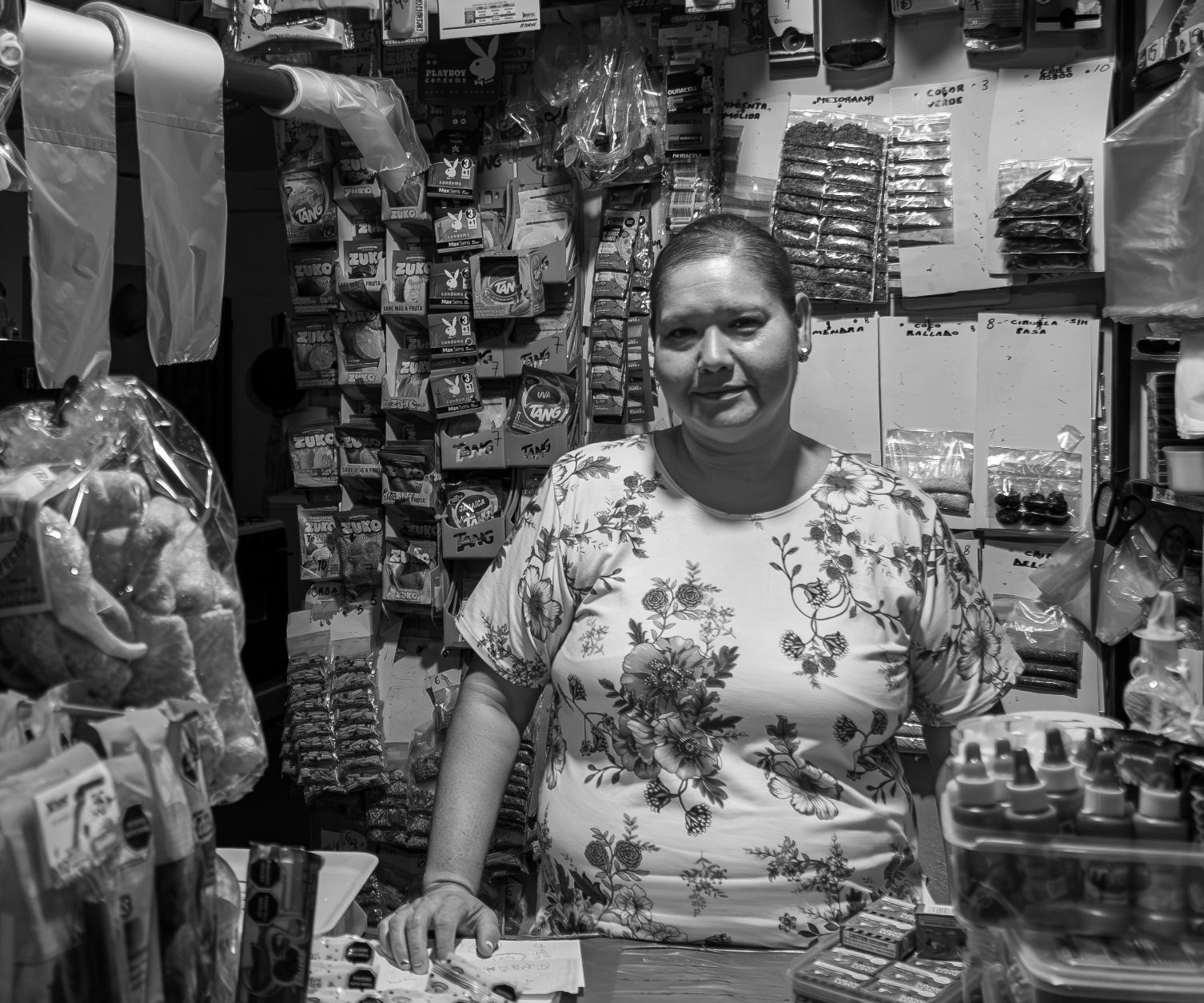
Abascal Miguel said the oxygen crisis was not unique to this region. It played out across rural Mexico as a symptom of a healthcare system that had never been adequately invested in.
"Oxygen became a huge problem in Mexico, it turned into a black market," said Abascal Miguel. "People showed up at the hospital with their own oxygen tank because there was none there. In Mexico, the more marginalized a place was, the less medical access it had. The more rural, the more poor — the worse off you were, to put it plainly."
Government's share of health spending rose from 45% in 2000 to a peak of ~54% in 2012–2013, then drifted back to 49% by 2023. Out-of-pocket costs — what families pay directly, like the Jimenez family paying for oxygen tanks — still represent 41% of all health spending, one of the highest rates in the for any country in the OECD, a index of countries and their performance on living metrics..
Context
How Mexico Funds Healthcare
Nine years of spending data reveal a system built at the floor — consistently underinvested, with families bearing an outsized share of the cost.
Mexico's real health expenditure grew from $90B to nearly $99B (constant 2023 USD) between 2015–2023. The 2020 COVID spike added $4B above the prior trend — but by 2023 spending had plateaued, suggesting no structural shift in the baseline.
Source: WHO Global Health Expenditure Database (GHED), 2024 release. NCU = Mexican Peso. Constant USD adjusted to 2023 base year. Years 2015–2023.
The economic pressure compounded everything. In Tetitlan, as in Valle Verde, most families lived day to day. A COVID test cost 1,500 pesos at the height of the pandemic — roughly equivalent to a week's wages for agricultural workers in the region. "Food or a test," said Gonzalez Vargas, summing up the choice she faced. "That was it."
Workers who left to find jobs in cities and sent remittances home stopped being able to do so. The fields went untended. The small stores sold less because their customers had nothing to spend. Prices rose and never came back down. "They went up and they stayed up. They never came down," said Gonzalez Vargas.
The crossroads for care
Geography between medical facilities kept rural populations distanced from accessing care quickly. The Sierra Madre mountain range weaves throughout Nayarit, creating valleys rich for farming and limited large settlements. Single-lane highways weave across the landscape, alongside newly built toll roads that are more direct - but can prove unavailable for low-income families.
The virus arrived in Valle Verde and Tetitlan the way researchers predicted it would — carried by the constant movement of people between rural communities and larger cities. Field workers commuted to farms in Ahuacatlan. Factory workers traveled to assembly plants in Tepic. Teachers, utility workers, and students all moved back and forth along the same narrow roads that connected these villages to the rest of Nayarit. Vendors traveled to Puerto Vallarta and Guadalajara to sell their goods. When they came home, they brought the virus with them.
Loading Nayarit healthcare map…
Nayarit's Public Health System
When COVID-19 arrived in rural Nayarit in 2020, it entered a healthcare system already stretched thin. More than 600 active medical facilities were spread across mountains, valleys, and coast — but access was never equal.
CLUES — Catálogo de Unidades de Salud, Secretaría de Salud, 2024 ↗
First-Level Clinics: The First Line of Defense
The bulk of rural healthcare runs through 116 IMSS family medicine units — the first point of contact for most low-income Nayaritas. In Ahuacatlán, UMF 17 served communities like Valle Verde and Tetitlán. These clinics were not built to handle a respiratory pandemic requiring oxygen or intensive care.
The Doctor Drain
As COVID overwhelmed hospitals in Tepic and Ixtlán del Río, the government reassigned rural doctors to staff them. The villages they left behind had to manage alone — or make the long drive for care that wasn't guaranteed to be available.
CLUES / IMSS Directorio, Nayarit, 2020–2023
Only 7 IMSS Hospitals for 1.2 Million People
When Jose Jimenez's oxygen dropped, his family drove to the IMSS-Bienestar hospital in Ahuacatlán. When his wife Augustina fell ill days later, she was driven further — north to the IMSS general hospital in Tepic. Nayarit had just 7 active IMSS general hospitals, all concentrated far from rural communities.
IMSS-Bienestar: Widespread but Underpowered
IMSS-Bienestar — designed for informal workers and rural residents — operated 257 clinics and 14 small hospitals across Nayarit's most remote communities. Valle Verde was served by one. But most of these facilities were outpatient only. When the pandemic required oxygen or intensive care, they couldn't deliver.
The 14 IMSS-Bienestar Hospitals
IMSS-Bienestar operated 14 small hospitals — more than double the IMSS count — but scattered across a vast state. They provided some intermediate care, but most lacked the oxygen reserves, ICU beds, and specialist staff that COVID patients needed.
IMSS-Bienestar Directorio / ANEXO 1, 2023
When Clinics Weren't Enough
Together, just 21 hospital-level facilities served the entire state — 7 IMSS general and 14 IMSS-Bienestar. Families who needed hospital care had to travel, often far, hoping a bed would be available. The geography of hospitals is the geography of inequality.
CLUES + IMSS Directorio + IMSS-Bienestar Directorio, 2024
Explore the Map
Filter by institution type. Hospitals cluster near Tepic and the coast. The Sierra Madre valleys — where Valle Verde sits — are the most medically isolated regions in the state.
Filter by type
Data Sources
- CLUES — Catálogo Nacional de Establecimientos de Salud ↗
- IMSS Directorio — Clínicas ↗
- IMSS Directorio — Hospitales ↗
- IMSS-Bienestar Directorio ↗
- INEGI Marco Geoestadístico 2023 — Shapefile 18mun
Doctors employed by the government moved to larger cities to support the COVID-19 response, requiring rural residents to travel further for medical attention. The infrastructure was never built for a crisis of this scale. Before the first cases of COVID-19 were reported in Mexico, researchers found rural areas had just 1.4 hospital beds per 100,000 people, compared to 18.8 in semirural areas, 34.2 in semiurban areas, and 80.4 in urban municipalities.
The few hospitals in the state handling the rapid response could be an hour or more away by car. For the most impoverished, using a car was out of the question. They relied on walking or rides from neighbors, but when someone's health is on the line those options began to quickly erode.
For some communities, traveling an hour or more to Ixtlan del Rio or Tepic for care was far more difficult than calling a taxi. Gonzalez Vargas recounts how she refused to carry people without face masks to the hospital, out of fear they would transfer the virus to her own family. There is no reliable public transit system in these regions, so having to walk a few kilometers to a bus stop with no reliable timetable for a private operator to take you to a city could take hours.
Reactionary versus preventative
Individual preparation, researchers argue, is not a substitute for systemic readiness and five years later, the systems that failed Jose and Augustina Jimenez remain largely unchanged. Abascal Miguel said Mexico entered the pandemic without a functioning emergency health response plan. As of 2026, no such plan has been established.
"Pandemics are going to keep happening," she said. "There is still no emergency health fund, no pandemic identification and response plan. There was one before it was dismantled under AMLO and never replaced."
The data Abascal Miguel's team compiled showed that the inequalities COVID exposed did not create new problems so much as illuminate old ones. Testing rates, hospital bed availability, oxygen supply, and vaccination prioritization all followed the same pattern during the pandemic. Resources flowed toward wealthy and dense areas, leaving rural communities like Valle Verde to manage on their own. That pattern has not reversed, according to their findings.
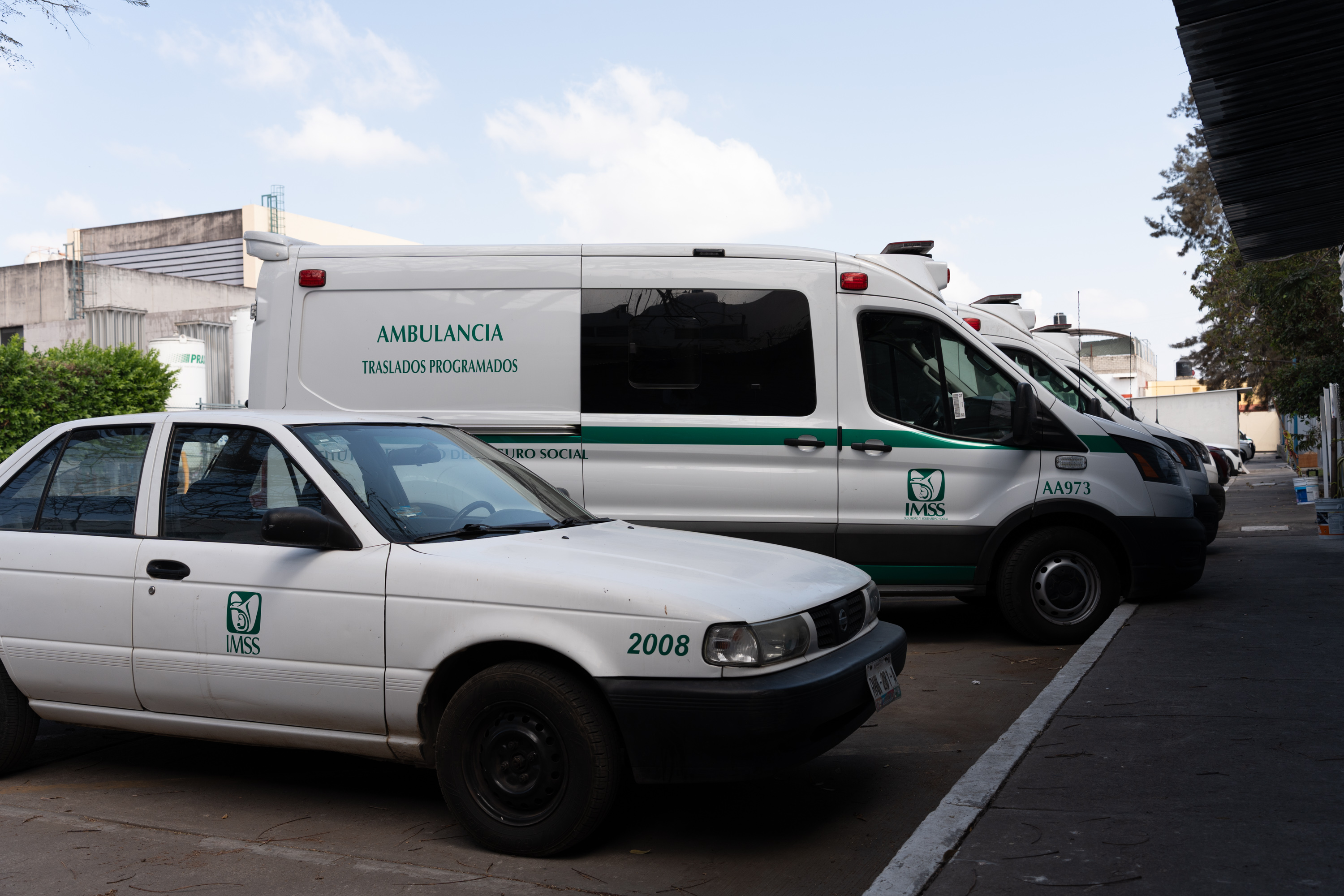
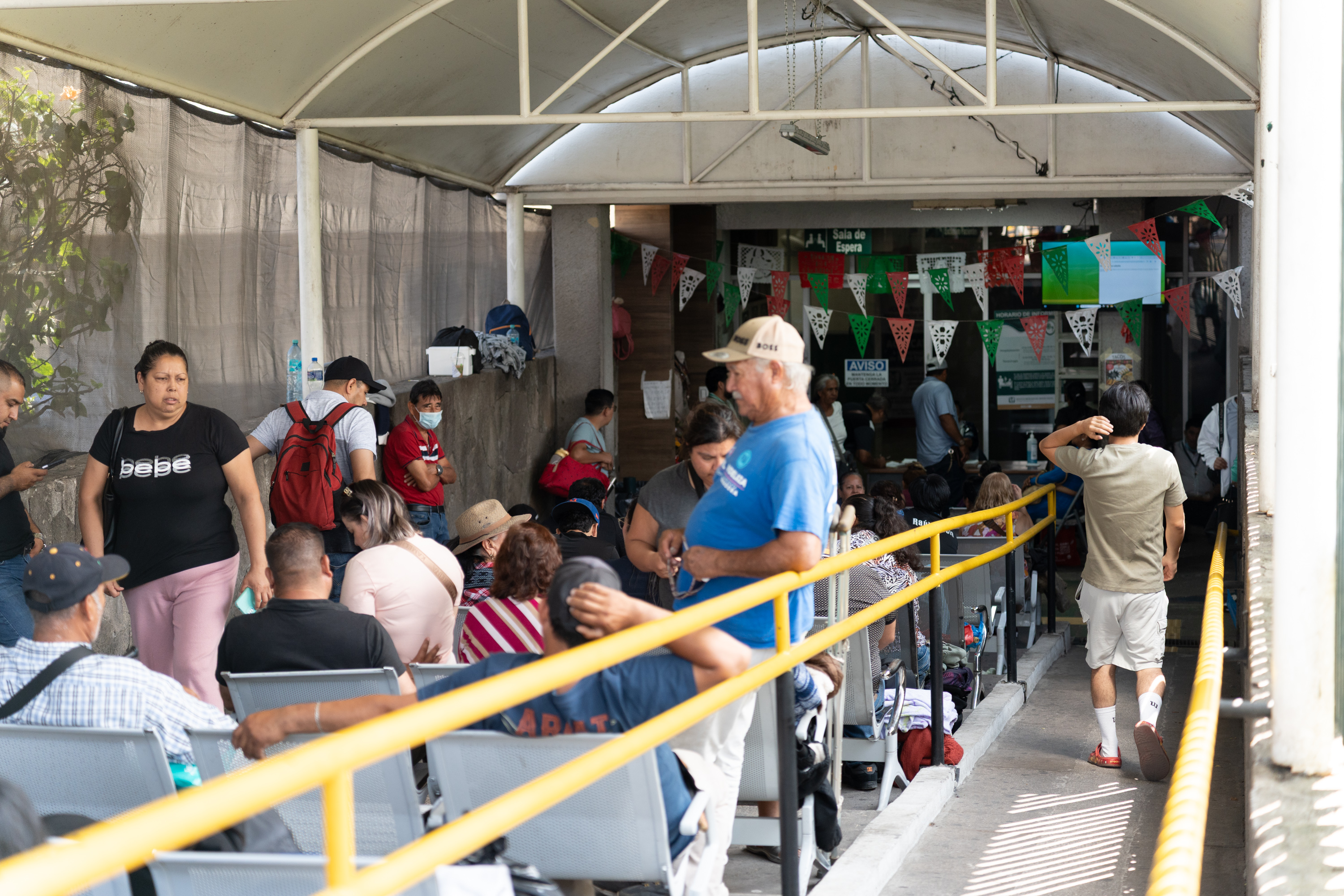
Rural municipalities still have a fraction of the hospital beds found in urban centers. Chronic diseases like diabetes, hypertension, and obesity, which greatly contributed to COVID's death toll, remain undertreated in low-income communities across Mexico. Health spending as a share of GDP has not meaningfully increased.
The program designed specifically for those communities — IMSS-Bienestar, built for informal workers and rural residents who fall outside the formal employment system — remains on uncertain footing as the government rolls out its new universal health service. Whether communities like Valle Verde will be better served by what comes next, or simply reshuffled within the same unequal geography, remains an open question.
"In Mexico, where you are born determines your health," said Abascal Miguel. "That is truly unacceptable."
Changes for a healthier future
Fatima still has the oxygen tank. It sits in a back room of the same grocery store her parents built, the same store she kept open through the worst months of the pandemic because closing it meant her family would not eat. She has not needed it and hopes she never will, but she has not gotten rid of it either.
"You say to yourself, I hope it never happens again," she said. "But it stays with you."
She is glad the height of the pandemic is over, but worried that any future crises will prove as disastrous or worse for her community. She and her husband continue to run their taxi business and small store, but knowing that is only possible because they had to continue working through lockdowns - something they fear to repeat.
New IMSS facilities are being built across the state. A newly constructed hospital near San Vicente in Bahia de Banderas — a coastal municipality that draws tourists and seasonal workers from across Mexico — represents the kind of infrastructure investment advocates have demanded for years. But Bahia de Banderas is not Valle Verde. The communities of the Sierra Madre valleys are still an hour or more from the nearest hospital, and the roads that separate them from care are the same ones they have always had.
In April 2026, President Claudia Sheinbaum signed a decree creating Mexico's Universal Health Service. The goal, she said, was unambiguous: by the end of her administration, any Mexican would be able to walk into any public health institution and receive care, regardless of which program they were enrolled in. A national health credential — physical and digital — would tie together IMSS, ISSSTE, and IMSS-Bienestar into a single portable system. Cross-institutional care would begin in phases starting January 2027. Supporters called it a historic step. Critics noted that Mexico had heard similar promises before.
The conditions that made Valle Verde so vulnerable in the winter of 2020 are not unique to rural Mexico. Across the United States, rural communities face the same compound disadvantages: fewer hospitals, longer distances to care, higher rates of chronic disease, and populations living paycheck to paycheck with no margin for a medical crisis. When those vulnerabilities stack — poverty on top of age on top of illness on top of distance — the consequences follow a predictable pattern, regardless of which side of the border they play out on.
Abascal Miguel, who has studied health systems across Latin America and the United States, said the lesson of Mexico's COVID response is not only Mexico's to learn.
"The inequalities in health follow the inequalities in everything else," she said. "Someone with economic vulnerability will have a health vulnerability — because of the type of care they can or can't access, the kind of work they do, whether they can afford to stop working when they are sick. That is not a Mexican problem. That is a human problem."
Jose and Augustina are buried in Valle Verde, having been moved from an unmarked grave. Seven children, dozens of grandchildren, and a community of neighbors who knew them their whole lives continue to reckon with what their deaths meant — and whether, when the next crisis comes, anything will be different.