As American Gold Mining Giant Displaces Farmers, Ghana Government Looks Away
By Charles Ayitey
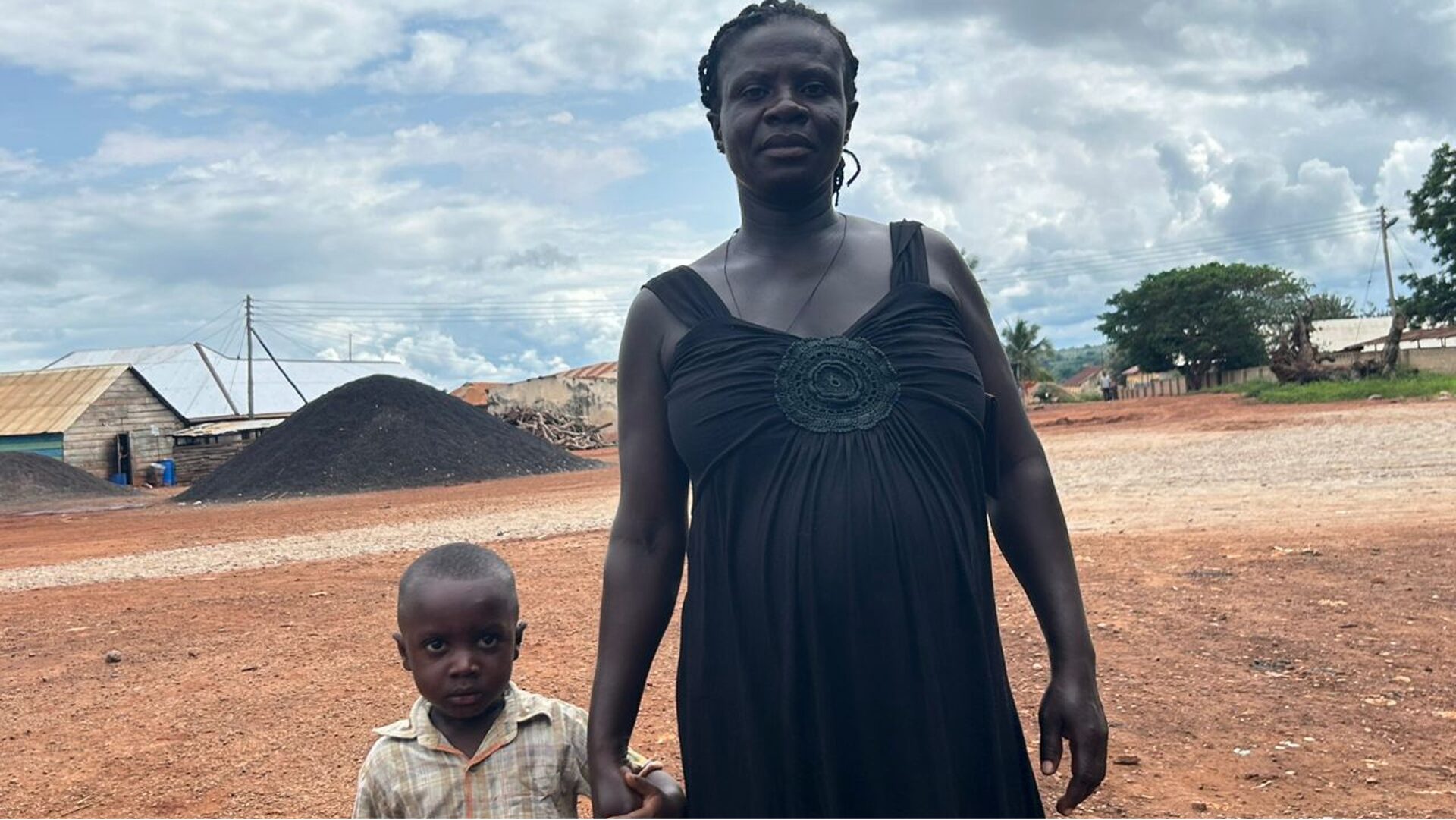
In May 2021, Ghanaian cocoa farmer Comfort Akyaa, 45, sprinted towards her 5-acre farm at Tekyire, a farming community in the country’s Ahafo North region. Panic fueled her steps as two excavators loomed, and three men measured her land.
These men were land valuers contracted by Newmont Corporation – a U.S.-based gold mining company in Colorado with holdings on four continents – to assess the value of plants and crops before taking control of the land.
“They said the land was now under Newmont,” Akyaa said. “I was ordered to go home and never return to it or face the consequences.”
The pregnant mother of four recalled her heart racing as she interrogated the men.
Ghana’s mining laws mandate that mining companies negotiate with farmers before acquiring their land.
Akyaa denied ever meeting a Newmont official.
Her plight is not unique.
A year-long investigation into Newmont’s gold mining expansion in the Ghana Ahafo North region found that more than 2,500 farmers’ land was abruptly taken from them, and the company only compensated them for one year’s worth of crops. Newmont decided not to provide comment on the story but documents also showed the gold miner rushed negotiations, and farmers said they were pressured into a culture of silence.
Since 2017, Newmont’s mining operation has continued to expand in the Ghana Ahafo North region, threatening the livelihood of farmers. Those farmers – like Aykaa – have tended to their lands for generations. And that line of inheritance is now at risk of being broken by Newmont.
Satelite imagery shows the loss of vegetation since 2016
Ghana is Africa’s largest gold producer, and Newmont predicts it will make more than $8.5 billion a year over its 13-year exploration of the Ahafo North region.
Across Africa, multinational mining companies displace farmers with inadequate compensation, exploit a power imbalance, and manipulate mining laws, according to MiningWatch Canada, a watchdog group focused on the industry’s impact. This leaves farmers impoverished and limited recourse to justice — a trend raising concerns from organizations like Human Rights Watch.
Akyaa’s farm stretches across five acres.
She checks her cocoa trees daily for signs of infections, theft, and optimal humidity levels.
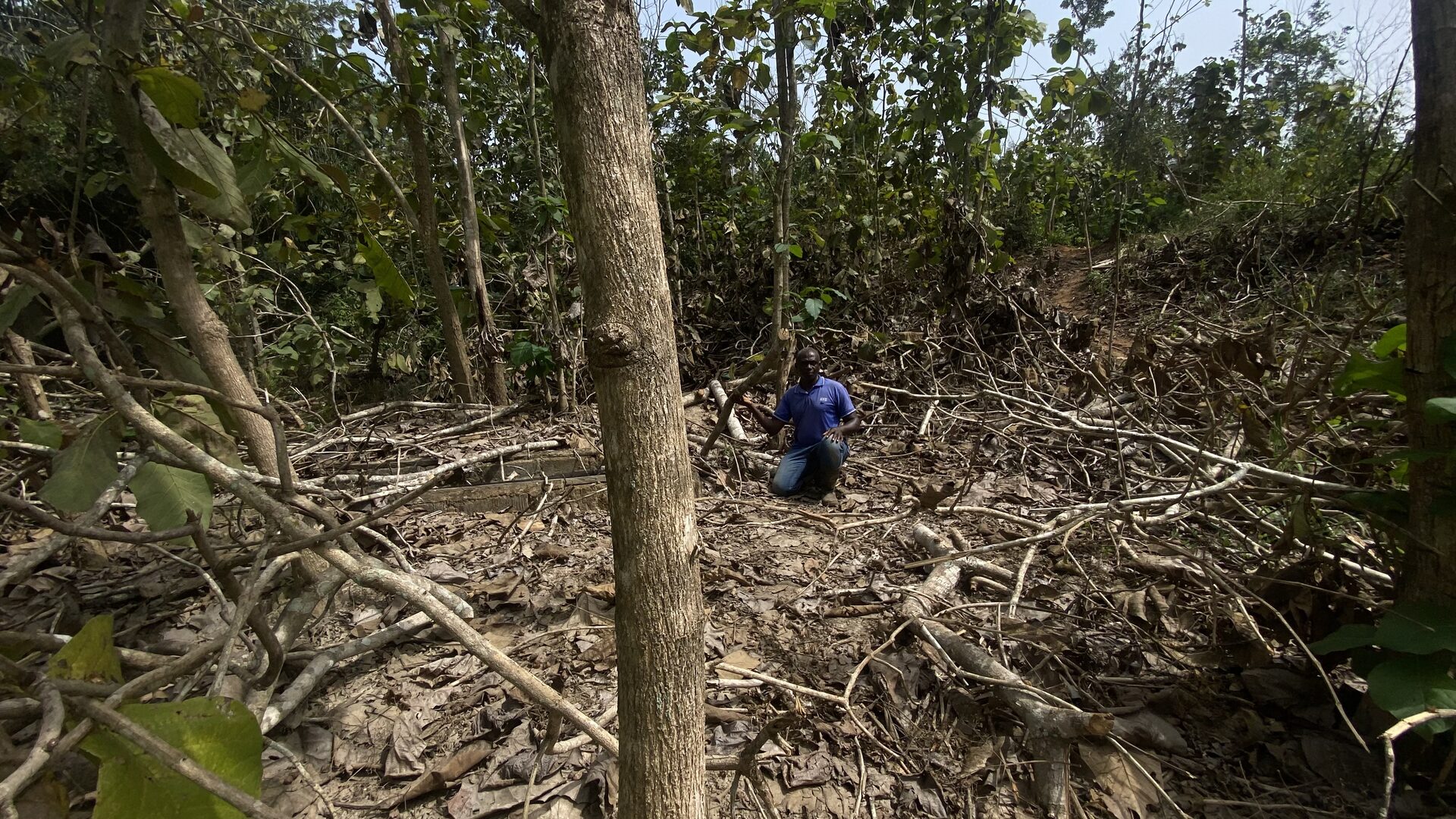
Her income from cocoa farming is critical for her family’s well-being. With a fifth child on the way, the 41-year-old, who worked her farm for 30 years, said she relies on it for utilities, groceries, and healthcare when government health insurance is insufficient.
Newmont’s July 2021 meeting with the Ahafo North farming community was to announce their presence to the farmers, explain the land acquisition process for their mining expansion project, and present compensation cheques to affected farmers like Akyaa.
Akyaa was hesitant to attend the meeting.
She didn’t trust Newmont, but she was desperate for answers.
“I saw many workers and top officials from Newmont on the high table,” Akyaa said. She counted 20 officials, including three chiefs, five farmer representatives, and two representatives of government agencies. “There were many farmers. Then, I knew I was not alone.”
After two hours of engaging a crowd of agitated farmers, Newmont handed each farmer a letter stating how much they would receive for their destroyed crops. The Newmont receipts show the gold miner only paid the “present value” and not the lifetime cost of damaged crops.
For Akyaa, the gold miner quoted $7,700 as a lifetime pay for her destroyed cocoa crops. But her land – which her ancestors passed on to her – was worth much more.
According to a coalition of affected farmers named Concerned Farmers Association, a fair price for Akyaa should her land and lifetime cocoa revenue be considered–as required by Ghana mining law–can be estimated at $150,000.
“I was cheated,” said Akyaa, who stated she had no choice but to accept the offer and feared fighting for what she believed she deserved. “They are powerful; I’m just a woman and a farmer.”
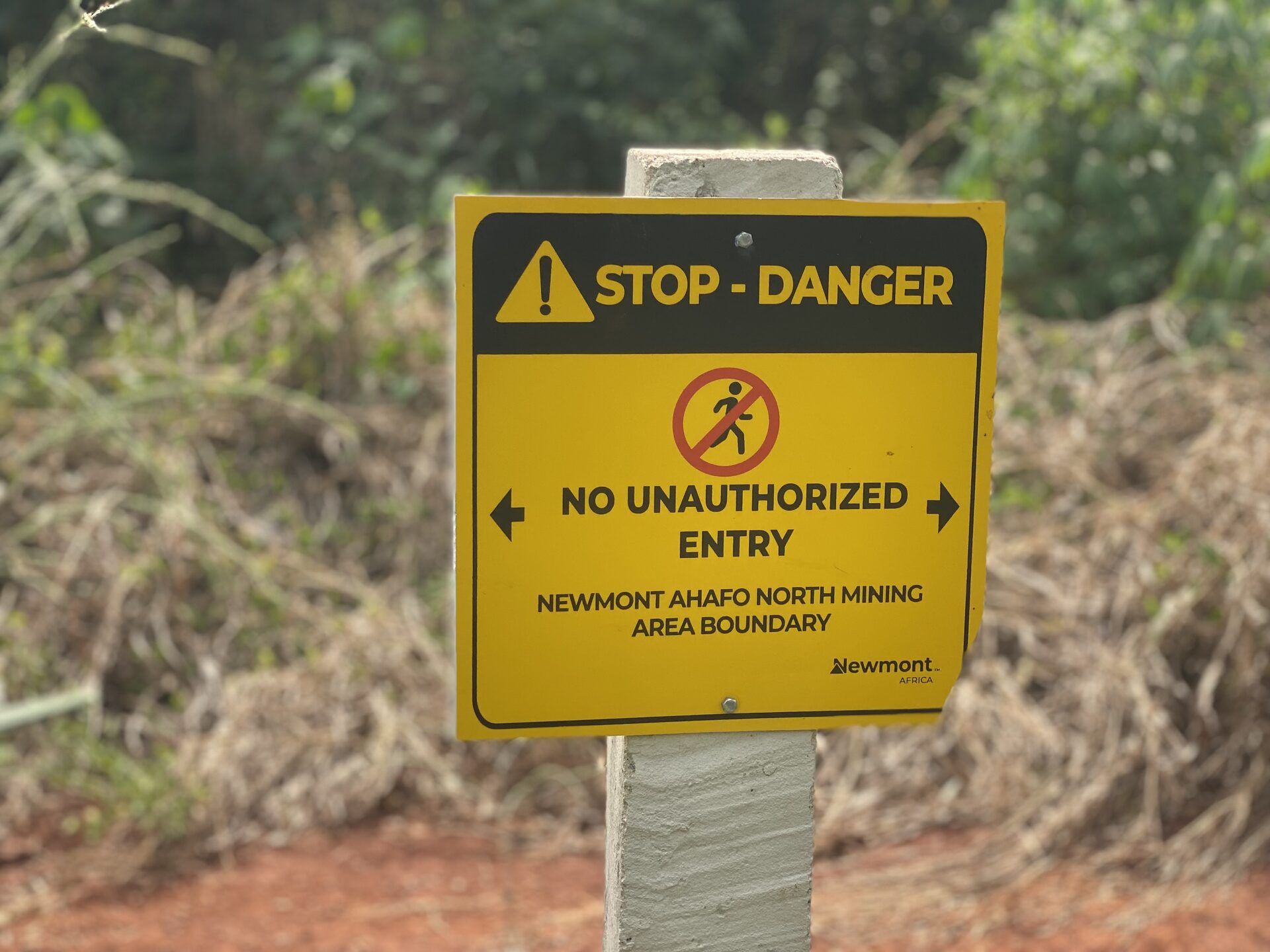
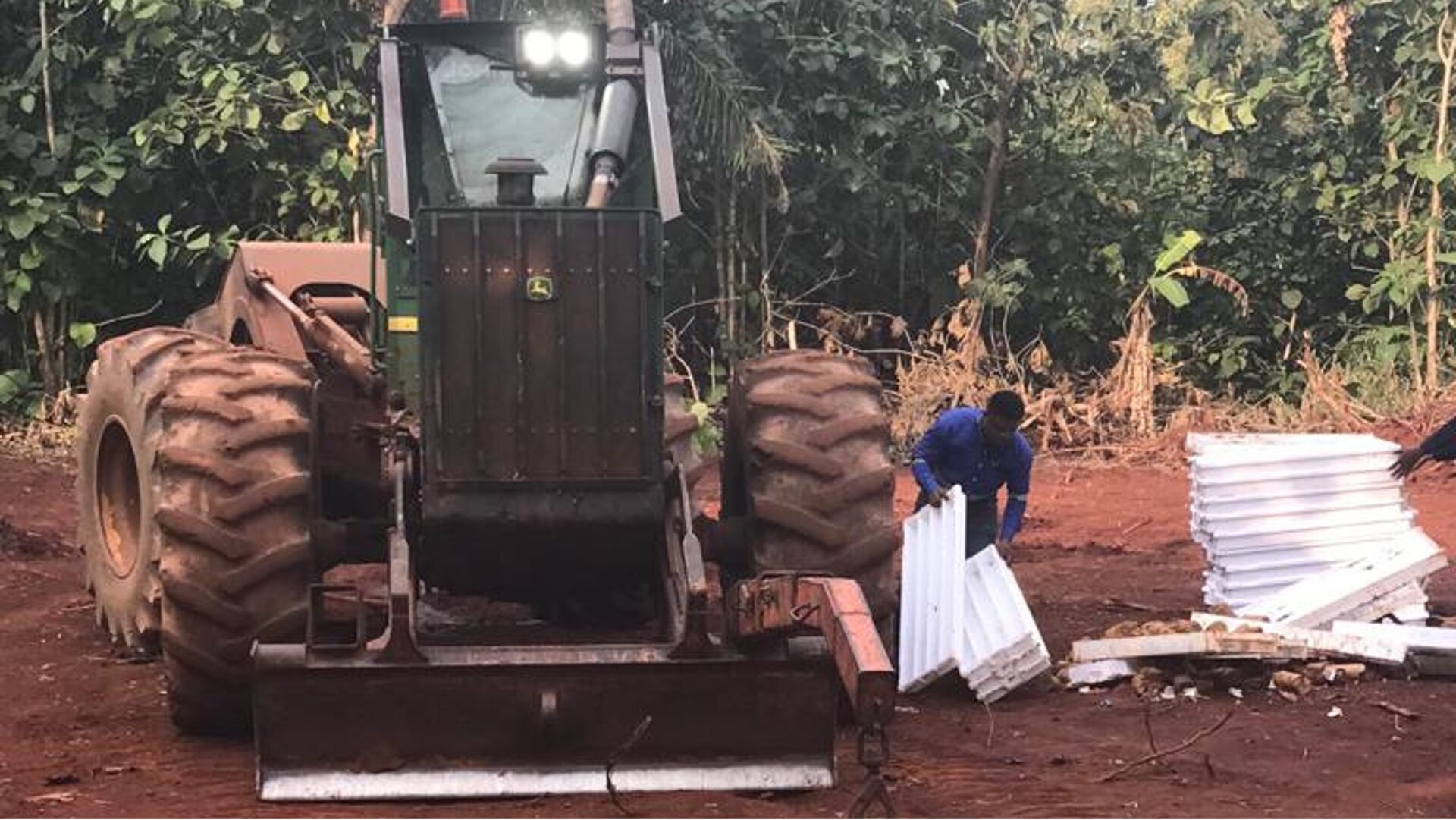
Newmont mounted warning posts on several farmer lands even before compensating farmers
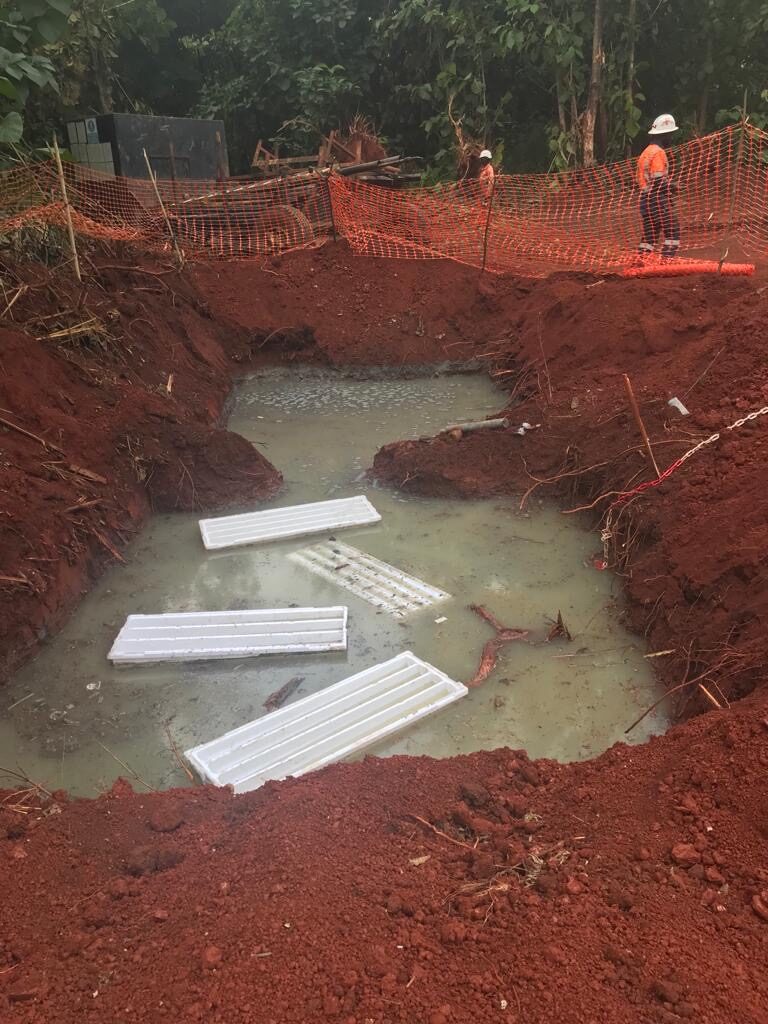
On Abraham Mensah's farm, the gold miner dug pits to commence drilling
Comfort Akyaa's farm fenced off by Newmont
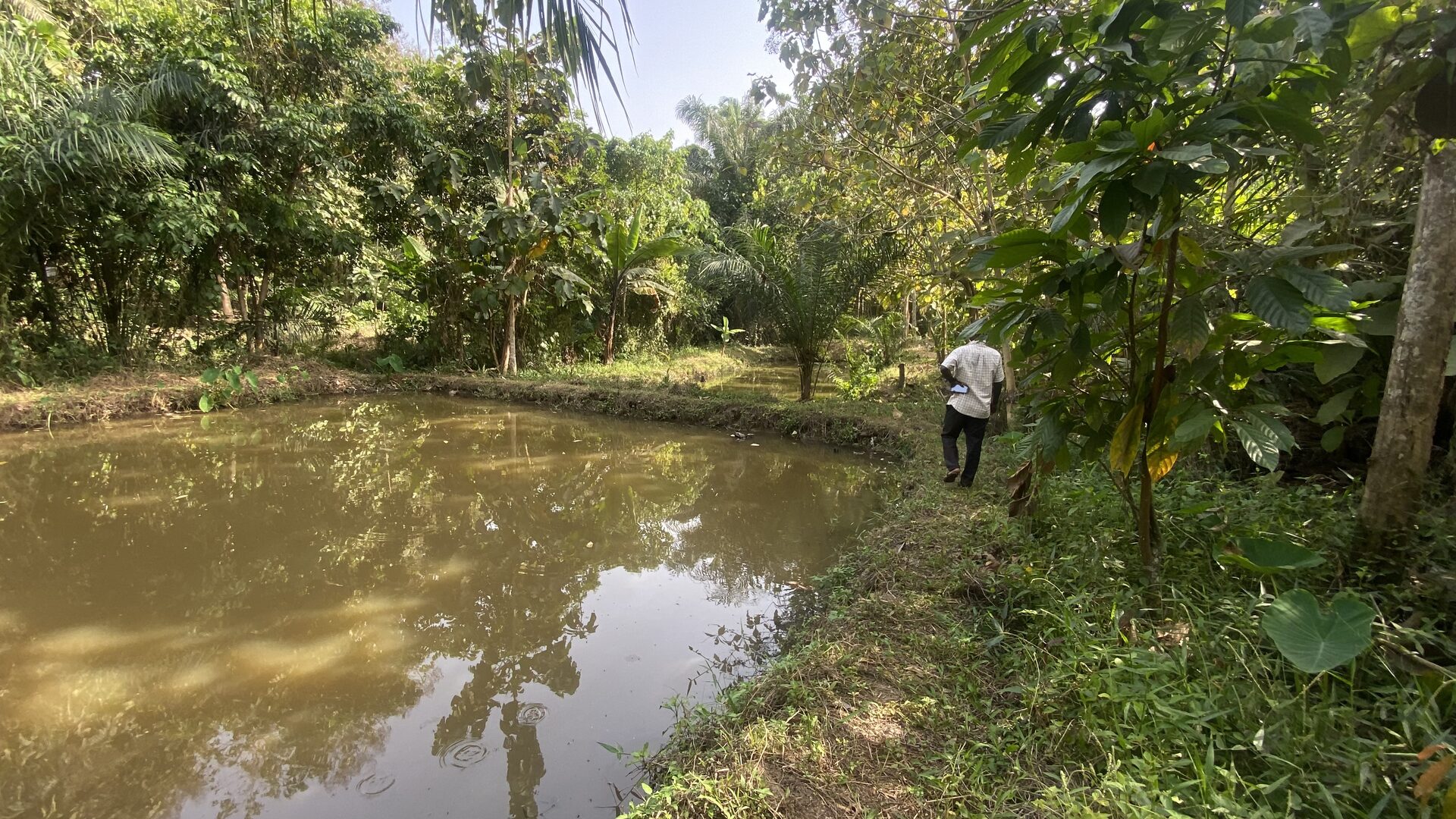
Farmer looks at what's left of his destroyed fish pond
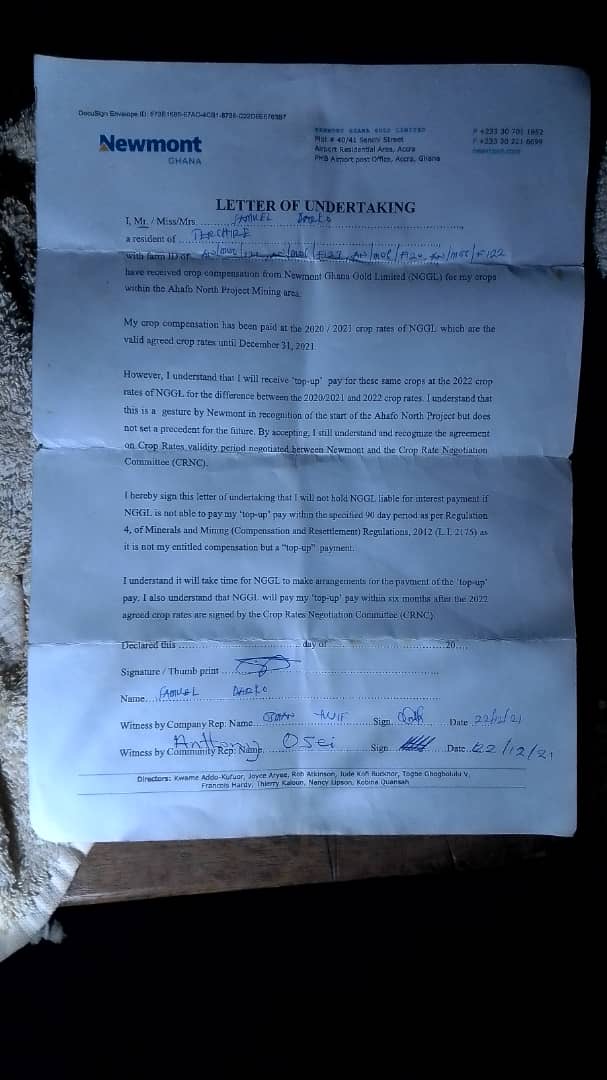
Newmont’s July 2021 partial payments to Ahafo North farmers came with a condition. Farmers had to sign an agreement waiving the gold miner’s legal requirement to pay interest payments on delayed compensation after three months of land acquisition.
Documents showed that farmers could only receive their payments if they agreed to waive Ghana’s legal requirement that mining companies pay interest on delayed compensation.
Akyaa, who couldn’t read or understand the contract that effectively took her farm away, signed anyway. “I don’t know what to do now,” she said. “They ripped us off, and now we are destitute with no means of income.”
How Newmont stacked the compensation committee in its favor
Before breaking ground in Ahafo North in 2017, representatives from the gold miner’s Ghana office, including external affairs manager Samuel Osei, met community leaders from all five affected communities – Terchire, Yamfo, Susuanso, Eferisipakrom, and Adurobaa — and promised to compensate farmers fairly and create 2,300 jobs.
The plan was met with praise.
In setting up its committee to negotiate compensation for crop rates, the gold miner pledged to be accountable, transparent, and considerate of all parties’ views.
But the reality on the ground reveals a bitter contrast to Newmont’s promises.
In September 2023, Newmont issued a press statement claiming it fully compensated 2,500 farmers and enjoyed strong community support for the Ahafo North Project.
However, payment receipts from 50 farmers like Akyaa revealed the gold miner only made partial payments while demanding farmers waive their rights to claim interest on delayed payments.
Newmont also rejected farmers’ legal right to individual negotiations, contradicting its claims of community support. It claimed this would lead to higher rates than those determined by the company’s own committee.
A closer examination of the committee revealed a lack of transparency and a power dynamic heavily favoring the gold miner.
The committee’s rules and regulations, drafted by Newmont, afford the company veto power over leadership selection and a larger voting majority.
For example, the committee’s composition included 16 representatives of the communities where exploration activities happened and an undisclosed number of Newmont’s representatives.
Also, restrictions on recording proceedings and sharing information with the media suggest a culture of control and limitation of dissent within the negotiation process.
Newmont’s crop negotiation committee minutes revealed attempts to expedite the compensation process, potentially to limit scrutiny by locals. A key concern centers on the appointment of the land valuer, who should be mutually agreed upon by law.
However, meeting minutes from March 2023 show that Newmont representatives unilaterally selected and paid the valuer, undermining the neutrality of the process and potentially leading to unfair valuations of affected farms.
In one of the meetings, a farmer representative accused Newmont officials of colluding with community leaders to wrongly blame farmers for delaying crop negotiations.
This accusation, documented in CRNC committee minutes dated January 20, 2012, arose after farmers declined the company’s request to increase the frequency of negotiations from once to twice a week.
Throughout committee meetings from 2021 to 2023, Newmont representatives consistently proposed lower crop rates, igniting tensions that repeatedly derailed negotiations.
Meetings were suspended 45 times due to unresolved disputes over cocoa prices.
In a heated July 6, 2023 session, the moderator, Prof. Nsiah-Jabaah, halted talks after Newmont offered US$11 per mature cocoa tree, disregarding the community’s proposal of US$15. Though the community cited government crop rates as the basis for their rates, Newmont representatives insisted that they were too high and unaffordable.
For farmers, the negotiation process was a “take it or leave it” condition.
Internal documents dating January 28, 2012, showed complaints made by farmers over signing documents and agreements they did not understand — under tight schedules.
Akyaa said some farmers had to seek legal assistance from non-profit farmer welfare organizations like CEPIL and WACAM.
Locals lost faith in Newmont’s committee.
In July 2021, John Mensah was the first local to resign after three years on the committee. His community nominated him to represent them. The farmer had worked on his teak plantation for twenty years.
“I felt I was letting down my people,” Mensah said. “It didn’t feel right. The negotiation committee only cares for the company’s interests, not ours.”
Upon resigning, the 55-year-old formed a special group to pressure Newmont for adequate compensation. The group currently has 550 farmers signed on, most of whom say their compensation by the gold miner is inadequate and unfair.
“It was a rubber stamp,” said Abraham Mensah, an affected farmer who resigned from the committee in 2021, joining John Mensah in forming a farmer group to reject Newmont’s compensation offer. “The company took hold of all proceedings and negotiations.”
The Resistance
In 2022, Farmers affected by the Ahafo North expansion project formed the "Concerned Farmers Association," led by John Mensah, a month after he resigned from Newmont's crop compensation committee.
Partnering with the WACAM, the association collectively rejected all compensation offers from Newmont.
WACAM's lawyers work closely with affected communities, gathering evidence and building solid legal cases to challenge Newmont's actions in Ghana’s court system.
Kwaku Afari, WACAM's technical director, said his organization remains the farmers' only lifeline to fair compensation.
"Farmers mandated us to lead them in land negotiations," Afari said. "They remain steadfast in not allowing the company on their land until proper legal procedures are followed. Their farms are still intact."
Afari's organization represented 100 farmers in court in 2022. In a recent case against Newmont in 2021, the lawyer secured a court injunction against Newmont's land grab of about 100 farmers.
As a result, Afari said despite this victory, the government of Ghana, together with Newmont, proceeded with the forced acquisition of some selected farmers totaling 350 despite the ruling - a move Afari described as arbitrary to the country's mining laws.
The group has mobilized farmers, held press conferences, and petitioned Ghana's parliament to challenge Newmont's land acquisition and compensation process.
In 2022, Mensah, the group’s chairman, mobilized members of the association to halt the exploration drilling activities on a parcel of land belonging to Abraham Mensah.
Newmont records show the company’s exploration team inadvertently impacted Mensah’s 7-acre teak farm.
Newmont retaliated. Mensah’s group was arrested and arraigned before a circuit court on August 30, 2023. The judge granted them bail and ordered them not to return to the contested farm until the court deemed fit.
Two months later, Mensah decided to visit his farm. He was met with a bare land. A notice indicating that the Ghana government had forcibly acquired it for Newmont was planted on it.
The 48-year-old felt cheated.
“I felt like a slave in my land,” Mensah said. The farmer has not received any compensation from Newmont or the Ghana government. “Newmont was prioritized over me, a citizen.”
Intimidation and Violence
Listen to Ahmed Musah, 55, narrate how scared he was when armed security approached his farm and warned him, and other farmers to leave their farms.
Farmers and lawyers from WACAM say Newmont and its associates use threats and force to seize land, violating Ghanaian law and international human rights standards.
Ahmed Mensah, who worked his 10-acre plantation for 30 years harvesting teak trees, woke up one morning to find armed security on his farm. Abraham said the guards instructed him to leave and never return to his farm.
“I was scared,” he said. “I chose my life over the farm."
In October 2023, in a petition to Ghana’s parliament, OXFAM USA and Ghanaian organizations WACAM and CEPIL alleged a pattern of intimidation against farmers resisting Newmont's compensation offers.
A coalition of farmers, backed by WACAM and CEPIL, released a timeline of intimidation and violence that occurred during Newmont’s expansion in the area. From August 2017 through March 2023, the timeline described incidents of assaults, police arrests and intimidation toward farmers.
When asked about the list, Newmont denies all accusations.
If we had power
Ghana's dependence on such gold export revenue creates a conflict of interest. The country is Africa’s largest gold producer, replacing South Africa in 2024 with a total gold output of 3.74 million ounces in 2022, up from 2.82 million ounces for the previous year.
The West African economy relies heavily on gold exports. 2024 financial records from Ghana’s Central Bank indicated profits from gold exports rose by US$431 million in the first half of 2023 alone.
This makes Ghana an attractive destination for Newmont’s operation.
The gold miner committed US$750 million to constructing the Ahafo North gold mine. In a 2023 forecast report, Newmont named the mine its “best-unmined gold deposit” in Africa, estimating it to produce 3.7 million ounces of gold by the end of the mine’s 13 years in 2037.
Newmont's financial muscle in Ghana is undeniable. In the first three months of 2023, their two Ghana mines – Akyem and Ahafo South – paid the government $237 million (converted from GHS 842.72 million) in taxes, royalties, and levies.
This amount dwarfs the 2023 first-quarter GDP contribution of Ghana's oil and gas sectors, which stood at a mere $3.7 million.
Enforcing fair compensation regulations for affected farmers is less important than maintaining the presence of large corporations like Newmont in the country.
Both government officials and local chiefs say their hands are tied.
Nana Yeboah Asuhene, a sub-chief in Taakyire, a village of 2,500 farmers in Ahafo North, faces imminent demolition of his home to make way for Newmont's mine.
"If we had the power, we would ask them to leave our lands, but we don't," Asuhene said.
He fears the future of his village’s farmers, who lack formal education. "Farming is all they know," he said.
The influence of Newmont is evident at the palace of Afirisipa Chief IV Nana Obohini Nkrawiri, chief of Takyire – located a mile away from Nana Yeboah Asuhene's home.
His residence, displaying signs of recent development, was refurbished by Newmont and had the company's tractors on its compound.
By the end of this year, Newmont expects to have cleared all contested lands, paving the way for a third mine by 2025 and subsequent operationalization in 2026. The government continues confiscating farmers' land who oppose the company's compensation offer as farmers’ hopes for compensation fade. As this mine expands and more farmers get displaced, Mensah and his members hope justice is served.