How Press Freedom in America Mirrors Uganda’s Authoritarian Slide.
By Marion Apio
Once a bastion of a free press, the United States has slipped. It now ranks 55 out of 180 countries in terms of press freedom, according to Reporters Without Borders, having fallen 38 places in the more than two decades that the nonprofit organization has been publishing its annual Press Freedom Index. America currently sits roughly where Uganda did when the index first rolled out in 2002.
Despite a constitution that ostensibly guarantees freedom of expression and of the media, Uganda is one of the most repressive environments for journalists. There is a stark difference between what is written in the country’s constitution and the harsh realities unfolding on the ground.
Since President Trump re-took office this year, he has vilified journalists, saying they are enemies of the state and has launched a multi-dimensional attack on journalism, including regulatory assaults, legal threats, and attacks against media outlets that do not side with his administration.
So what does the future of a free press in the United States mean if the country could be following a similar trajectory as an authoritarian regime like Uganda?
U.S. press freedom is being restricted and the country is shifting towards authoritarianism, according to Christopher Resch, a press officer at Reporters Without Borders (RSF), the international humanitarian organization that monitors global violations of press rights.
Among the most troubling developments, Resch said, is the U.S. government’s decision to cut funding to the Global Agency for Media, which is an independent federal agency overseeing public service media networks, including Voice of America and Radio Free Asia, that provide unbiased news in countries where the press is restricted. More than 1,000 journalists have been put on paid leave because of cuts by the Trump Administration to federally funded news organizations, the company has said. The government also revoked The Associated Press’ White House press credentials over a terminology dispute, keeping one of the world’s largest news services from accessing news conferences.
“Access to free press as a basic right for everyone is being threatened,” Resch said.
Many journalists now face interference in reporting news to hundreds of millions of Americans, as well as global audiences who are restricted from accessing public information.
According to research from the Committee to Protect Journalists, several journalists and news outlets are facing threats, online harassment, legal pressure and a surge in politically motivated attacks including public calls to revoke the licenses of major broadcast networks and suggestions that some should be declared illegal. Journalists have found themselves targeted not only through libel lawsuits but also through rhetoric that frames the press as enemies of the people.
Veteran investigative reporter David Barstow warns that these efforts go beyond criticism — they represent a deliberate attempt to undermine the constitutional protections that have long shielded journalists from government retaliation, raising alarm about the erosion of press freedom in the United States and across the global media landscape.
“The current U.S. government is racing towards authoritarianism,” said Barstow, a former New York Times reporter who now runs the Investigative Reporting Program, a nonprofit newsroom at UC Berkeley Journalism School.
Resch adds that the damage to press freedom often leads to deeper systemic breakdowns, such as rising government hostility toward its own citizens and immigrants, the erosion of democratic institutions, disregard for basic human rights, and the normalization of disinformation that erodes public trust in the media.
When nations shift toward authoritarianism, independent media is often the first target — and once lost, press freedom is very difficult to restore.
Globally, authoritarian regimes are getting stronger. And more journalists are being killed and imprisoned than ever before, with over 320 behind bars worldwide in 2023, according to the Committee to Protect Journalists.
Findings from the 2025 Democracy Report by the V-Dem Institute, a project based at the University of Gothenburg, Sweden, that focuses on the state of democracy in the world, estimates that 27 countries have transitioned from democracies to autocracies since 2005. The report found that for the first time in over two decades, the world now has more autocracies (about 91) than democracies (about 88). There are only 29 liberal democracies remaining, the least common form of governance today.
According to the institute, America remains classified as a liberal democracy. But Barstow, Resch and others say recent attacks on press freedom in the U.S. are paving the way for a drastic shift toward authoritarianism.
Uganda has a history of caging press freedom and it has done so for over four decades, said Professor Eugene Kinyanda, a lecturer at Makerere University, Kampala, Uganda. The government contends that its hard stand is meant to protect journalists, and justifies the use of violence and beating reporters to prevent them from interfering with state operations. But assaults of journalists have become a daily occurrence, according to RSF, and reporters are routinely being threatened and harassed. Some have been kidnapped and tortured, while many are leaving the profession, fearful of risking their lives in pursuit of the truth.
“The media in Uganda does not operate in a vacuum,” said Joseph Beyanga, a former news editor at Kampala FM Radio, one of the prominent radio stations in the country.
“It reflects the repressive society within which it functions.”
Since the early 2000s, one of Uganda’s leading independent newspapers, The Daily Monitor, has endured repeated raids by security forces: in 2002 after reporting on a military helicopter crash; in 2005 over alleged support for opposition figures; and a major shutdown in 2013 after publishing a letter detailing a presidential succession plan.
Uganda is heading into an election cycle in 2026 — a period when violence against journalists intensifies before and during elections, said Robert Sempala, the executive director of the Human Rights Network for Journalists in Uganda, and other Ugandan reporters with experience covering elections.
During election years, reporters covering the campaign trail, election irregularities, police brutality, and opposition rallies have been beaten, brutalized, and arrested. Some are killed by military police. Although the network’s data is incomplete and does not show great surges of violence in election years, it does show more than 130 documented assaults against journalists in the last two election cycles. Elections are also marked by government censorship, internet shutdowns, and load-shedding.
It is an ominous sign as the country prepares to elect a new president next year. According to Muthoki Mumo, CPJ's Africa program coordinator, solidarity among journalists will be essential to ensuring the safety and freedom of members of the press during the political season, so that the public can receive the news from a diversity of sources to make informed decisions.
CPJ documented attacks in March, detailing the harassment, assault and arrest of journalists covering a recently concluded by-election in Kampala. Such by-elections are held to fill vacant parliamentary seats — typically in cases where a sitting member of parliament has died. There was also a shuttering of a media outlet in connection to its reporting on alleged vote rigging.
Isano Franscis of NBS TV was rushed to hospital with severe injuries this year. Many other journalists from NTV were also beaten, detained and had their equipment confiscated by military police.
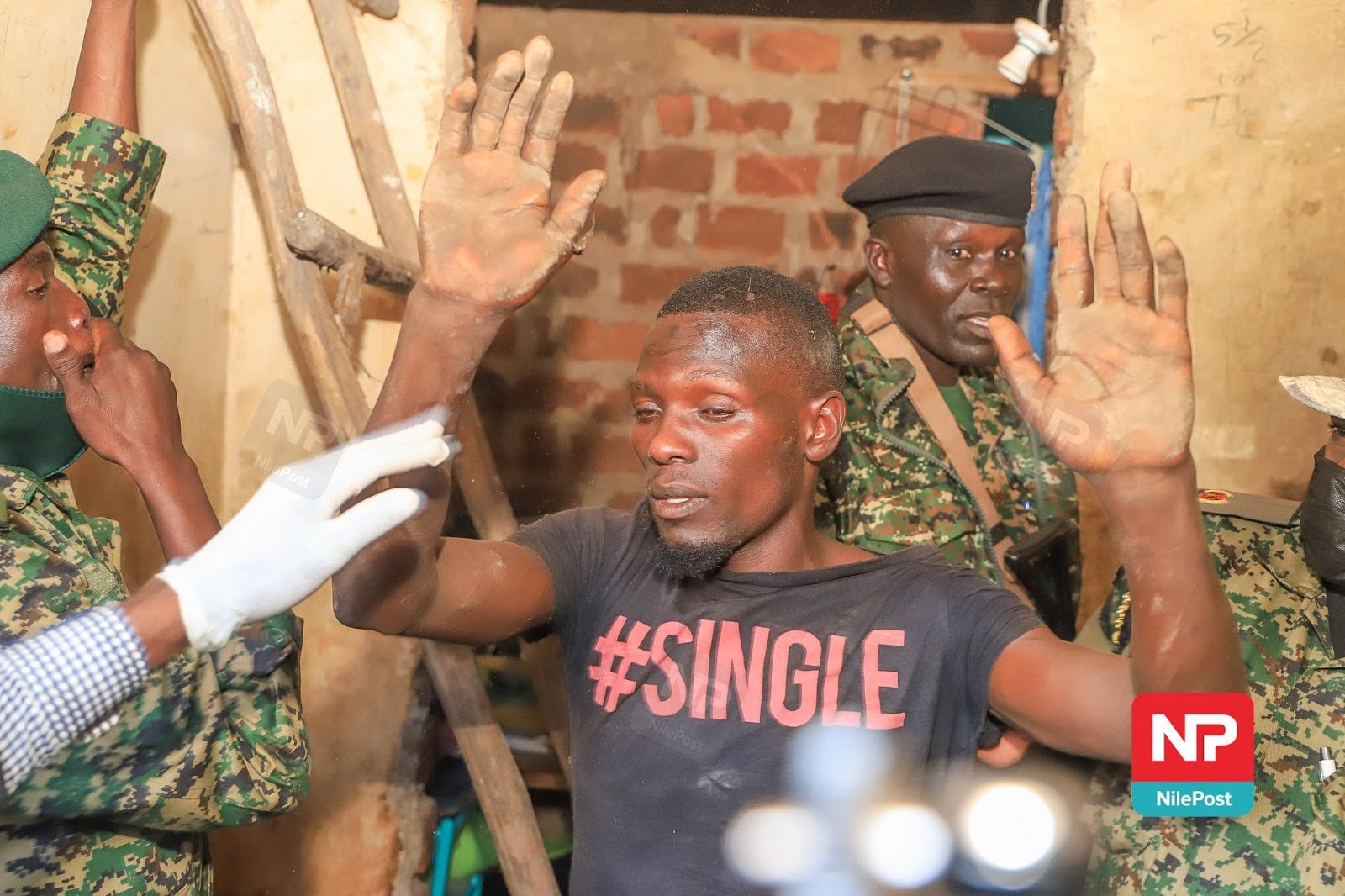
It is part of a long-running trend. Journalists have faced numerous attacks in recent years during election cycles, particularly those covering opposition candidates.
When opposition leaders are attacked, journalists covering them often are assaulted, said Irene Abalo, former political reporter with Nation Media Group. She was brutally beaten by military police in 2021, while covering a press conference by opposition leader Robert “Bobi Wine” Kyagulanyi, who was talking about Uganda human rights abuses. Now she is in a wheelchair, unable to go back to field reporting.
“It happened to me. It has happened to the public and we always hope and wish it doesn't happen again to another journalist,” Abalo said.
Watch The Documentary on YouTube — Abuse of Journalists in Uganda
In this documentary, investigative journalist and former HRC student fellow Marion Apio explores the harsh realities faced by journalists in Uganda, shedding light on the systemic abuse, censorship, and dangers that threaten the lives of journalists and press freedom in the country. Produced in partnership with the UC Berkeley Human Rights Center, Media Challenge Initiative, and Berkeley Journalism, the film highlights the resilience of new and veteran journalists and the urgent need for reforms to protect the future of journalism in Apio’s home country. The film calls for global attention to the growing challenges faced by media professionals in one of Africa’s most subtly repressive environments.
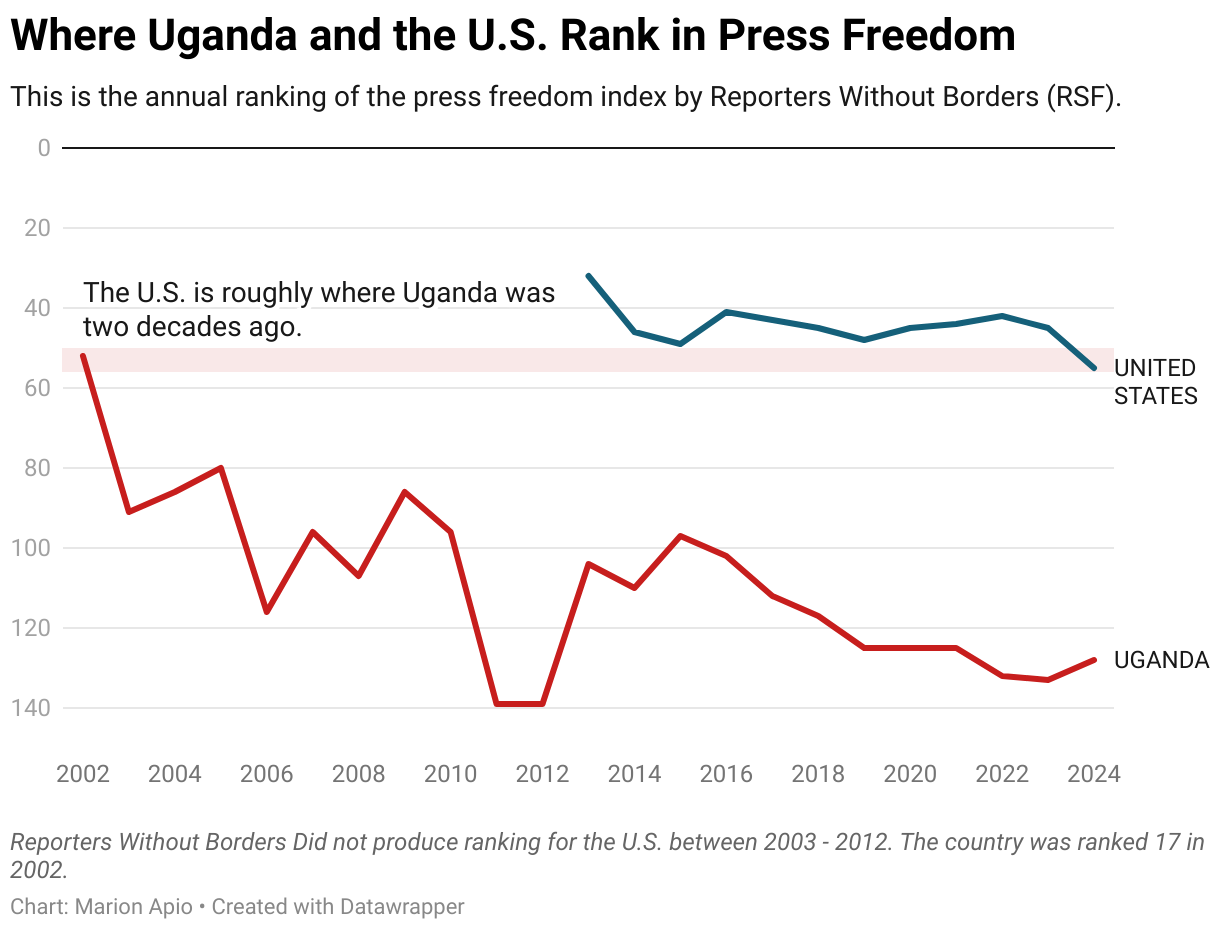
The tension between political leaders and the media is as old as the United States republic itself, said James Wheaton, founder at First Amendment Project, a nonprofit public interest law firm for free speech.
Historically, U.S. presidents have long attempted to control the media. John Adams supported the Sedition Act of 1798, which criminalized criticism of the president and Congress, leading to 25 arrests, 15 trials, and 10 imprisonments of newspaper editors.
According to Wheaton, Thomas Jefferson also made efforts to control the media narrative during his presidency in the early 1800s by funding sympathetic newspapers and using political allies to discredit critical press.
Wheaton said that the decline continued during the Civil War under Abraham Lincoln, who targeted certain newspapers, and again after World War I, when Woodrow Wilson and his successors cracked down on publications and organizations deemed subversive. The pattern resurfaced under Richard Nixon, who repeatedly attacked the media, using government power to punish journalists. But Trump’s aggressive moves against the press may be unprecedented.
“It's always been precarious in the U.S. that the media is always under attack.” Wheaton said. “President Trump, his administration and supporters outside the government present the greatest threat to press freedom in the history of the republic.”
According to Wheaton, Trump and his supporters are deliberately going after the media. They want to put media outlets out of business by forcing them into expensive court cases or settlements.
The current administration also wants to scare journalists away from stories. A recent example is the pressure it exerted on The Associated Press to change references to the Gulf of Mexico in its AP Stylebook, which is used by most news sites, to Trump’s preferred term: Gulf of America. If they don’t bend to the president's will, Wheaton said, the repercussion is exclusion from the press pool, denying the media access to the White House.
Despite the president’s actions, there is still hope for press freedom and American democracy to survive. The court system demonstrated this when a judge recently issued a temporary injunction, telling the White House to let AP back into the White House.
Wheaton said the current suppression of the media and journalists is a concentrated attack on the press. Efforts are underway to bring cases to the Supreme Court to not just chip away, but hammer away at protections for the media, he added.
In March, the U.S. government was added to the 2025 Global Human Rights Watch List by Civicus, an international nonprofit that monitors civic space across 198 countries worldwide.
The move comes amid President Donald Trump’s “assault on democratic norms and global cooperation,” said Civicus. The organization also cited the Trump administration’s cut of more than 90% of its foreign aid contracts and its crackdown on diversity, equity, and inclusion — which Trump called “illegal and immoral discrimination programs.” The inclusion signals growing concern over the rapid decline of civil liberties in the U.S., placing it alongside countries like the Democratic Republic of the Congo, Italy, Pakistan, and Serbia on Civicus’ list.
The future of journalism in Uganda rests on hope — hope in the young, and resilient journalists determined to fight for their rights and democratize the practice of journalism.
"Young journalists have so much energy and passion to fight for the rights of journalists and their own rights to access information," said Abaas Mpindi, CEO of Media Challenge Initiative, a Ugandan based nonprofit organization whose mission is to skill and empower the next generation of journalists.
Mpindi added that he hopes the younger generation will be better informed and know how to defend their rights.
“Journalists are, in some ways, the last line of defense between functioning democracy and autocracy, Barstow said. Anyone who's thinking about doing journalism right now knows that never has the cause been more clear and never has the need been so great.”
“Never in my life have we needed you more than we need you right now,” Barstow added. “Brave journalists who continually assert our right to speak freely about what they see and hear and uncover in their reporting is more necessary and indispensable than ever.”
In the United States now, the antagonism toward journalists is not uniform. Often those who are criticized by the Trump administration are those who have reported stories about those in power that they don't view favorably.
“They are not against all media,”
Wheaton said. “They are only fighting the media that won't bend the knee for them and cover it the way they want it.”
“Things will only change when the government changes,”
said Abalo, the former political reporter who is now disabled and working as an online sub-editor at Nation Media Group.
However, the media must be willing to fight for the rights of journalists, Beyanga said.
News outlets like The Guardian have come out to say that they will not bow to Trump. Guardian U.S. editor Betsy Reed says in a letter posted on the news site, “Whatever happens in the coming months and years, you can rely on The Guardian never to bow down to power, nor back down from truth.”
Media companies also have a responsibility to ensure that their journalists are safe and are adequately prepared to operate in a risky environment, providing protective equipment and ensuring risk assessments are carried out and mitigation measures put in place ahead of assignments. Meanwhile employers have a duty to ensure that their journalists have access to legal, medical and psychosocial support should they need it, she added.
In Uganda, media experts say that they need to realize that an attack on journalists is also an attack on them.
When journalists are attacked, what actually is being attacked is the public right to know either what their government is doing, the truth about what government policies are being enacted and how such policies affect their lives.
“This is not the time to self-censor,” Barstow said.