CAUGHT BETWEEN
TWO WORLDS
In Silicon Valley, Chinese elderly immigrants start to reconsider their migratory lifestyle. Although on “the land of the free,” some don’t feel as much freedom as they did in China.
By Junyao Yang
May 5, 2023


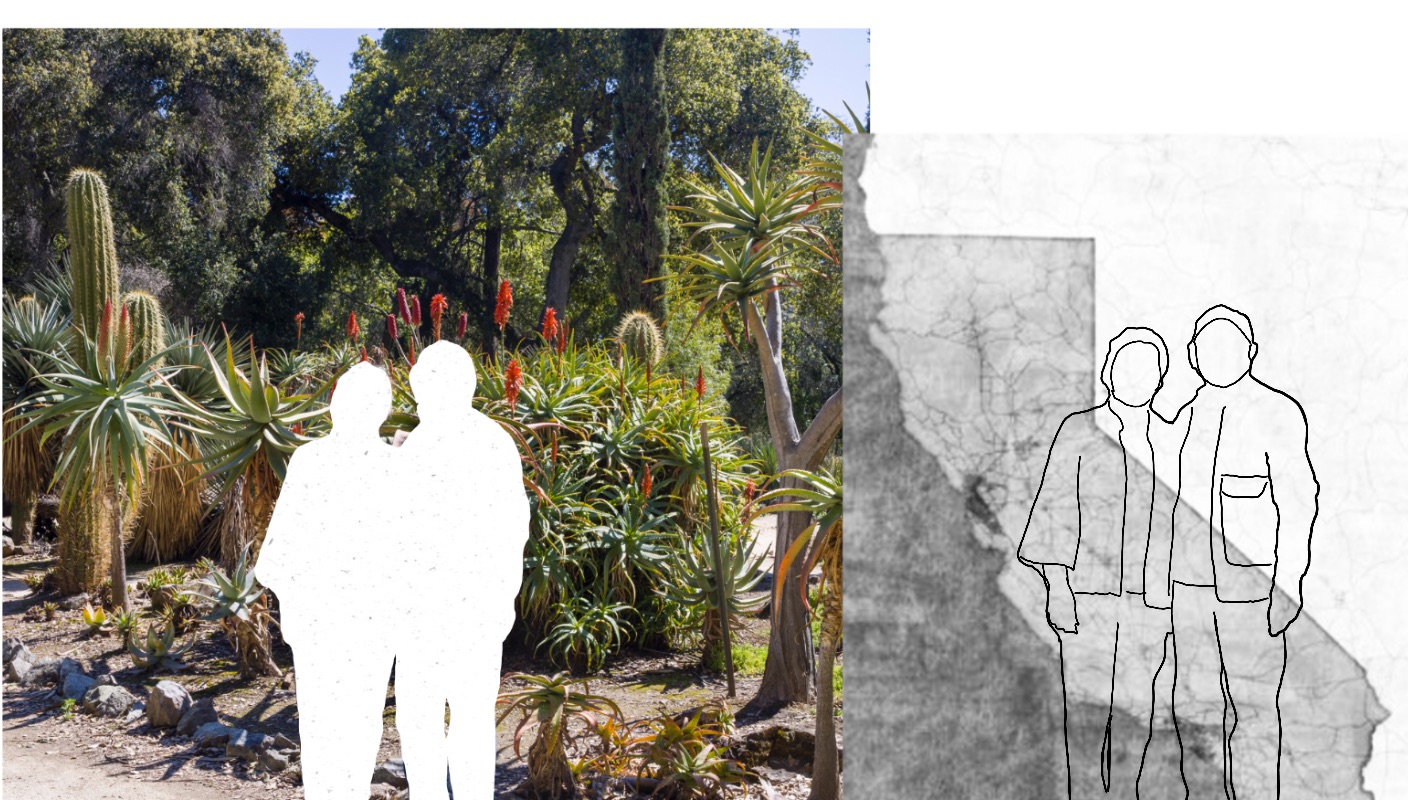
Bingxian Wang, 61, visited the United States for the first time in 2012 with his wife. His son had come to the U.S. to study the previous year and this was the first time Bingxian visited him.
Since then, he has flown to the U.S. almost every year to visit his son, bringing him walnuts and pastries from his hometown in Zhejiang. The pandemic put those regular visits on pause.
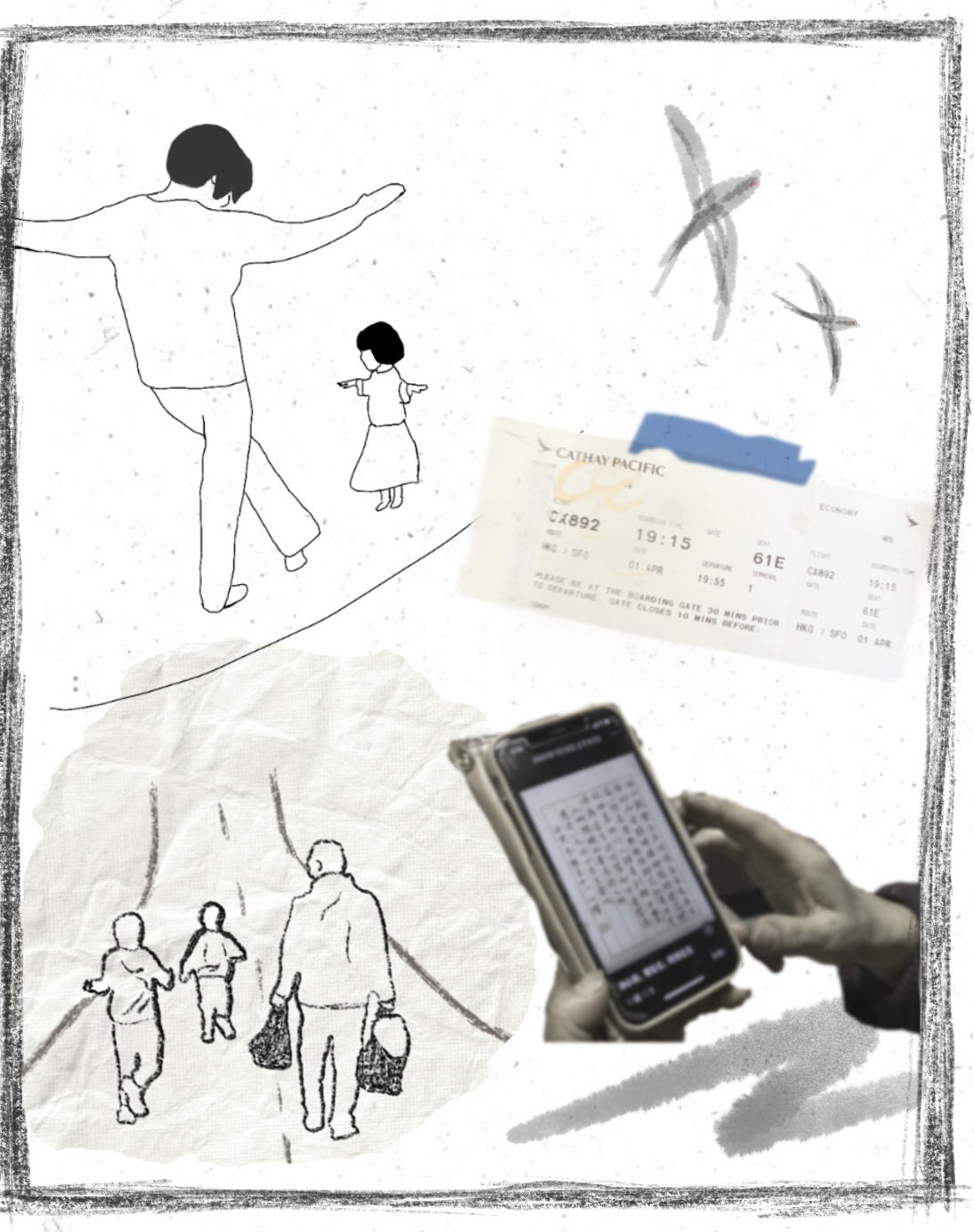
Last Christmas, he arrived again at San Francisco International Airport. That was his first visit since the pandemic. This time, he stayed till March, longer than any of the visits before, giving themselves the time to test out retirement life in the U.S.

As young Chinese tech workers settle in Silicon Valley, Chinese elders are also flying into the U.S. to stay with their adult children, who now have their own families in the Bay Area. They come to reunite with family, help with house chores and share the childcare responsibilities of their grandchildren.
For years, these older Chinese grandparents have been living a “migratory lifestyle,” as described by anthropologist Nicole Newendorp at Harvard University, traveling back and forth to balance commitments on both sides. But just like the Wangs, Chinese elders are now reconsidering the migratory lifestyle as the pandemic recedes.
Since 2020, China has severely restricted travel, limiting the number of flights in and out of China. Direct flights between the United States and mainland China are extremely hard to come by.
Overseas travelers entering China had faced mandatory quarantines in a hotel for 14 days or more at their own expense, a requirement that wasn’t scrapped until this January.
Thus, travel between the two countries has become a hassle that’s costly and complicated, especially for elders who may find international travel hard to navigate.
“That really has become a time when people have to make a choice: Do I actually go and stay because I’m not going to be able to go back and forth?” said Newendorp, who published the book "Chinese Senior Migrants and the Globalization of Retirement" published in 2020, in which she highlights the experiences of Cantonese senior migrants in Boston’s Chinatown, while also speaking to the broader idea of retirement and aging.
Some elders continue flying across the Pacific, while others have decided to consider the U.S. their new home. For those choosing to stay, leaving everything behind and migrating to a new country at a later stage in life isn’t easy, especially in a country where they don’t speak the language nor understand much about the cultural and social norms.
They encounter barriers when conducting the simplest daily tasks that they can easily do in China, including driving to the grocery store, running errands at the bank or just greeting their neighbors.
Seniors also face the challenge of navigating the complicated intergenerational relationships with their family members, while also seeking to build new community ties outside of the family.
Raised under the cultural belief of filial piety (xiào-shùn 孝顺) – the idea of treating parents with respect, obedience and honor – most East Asians are expected to provide care and financial support for their parents when they retire. But when aging parents and their adult children live in different countries and across time zones, providing that care becomes nearly impossible, especially during a pandemic.
For Summer Xia, 37, her parents never planned much for their retirement. They never expected how much their life quality would decline when they grew older and became sick. In 2021, Summer’s mom, who has always been in good health, accidentally fell at home in China and had to go through surgery that eventually led to serious complications. Soon after that, her dad was also hospitalized due to heart failure.

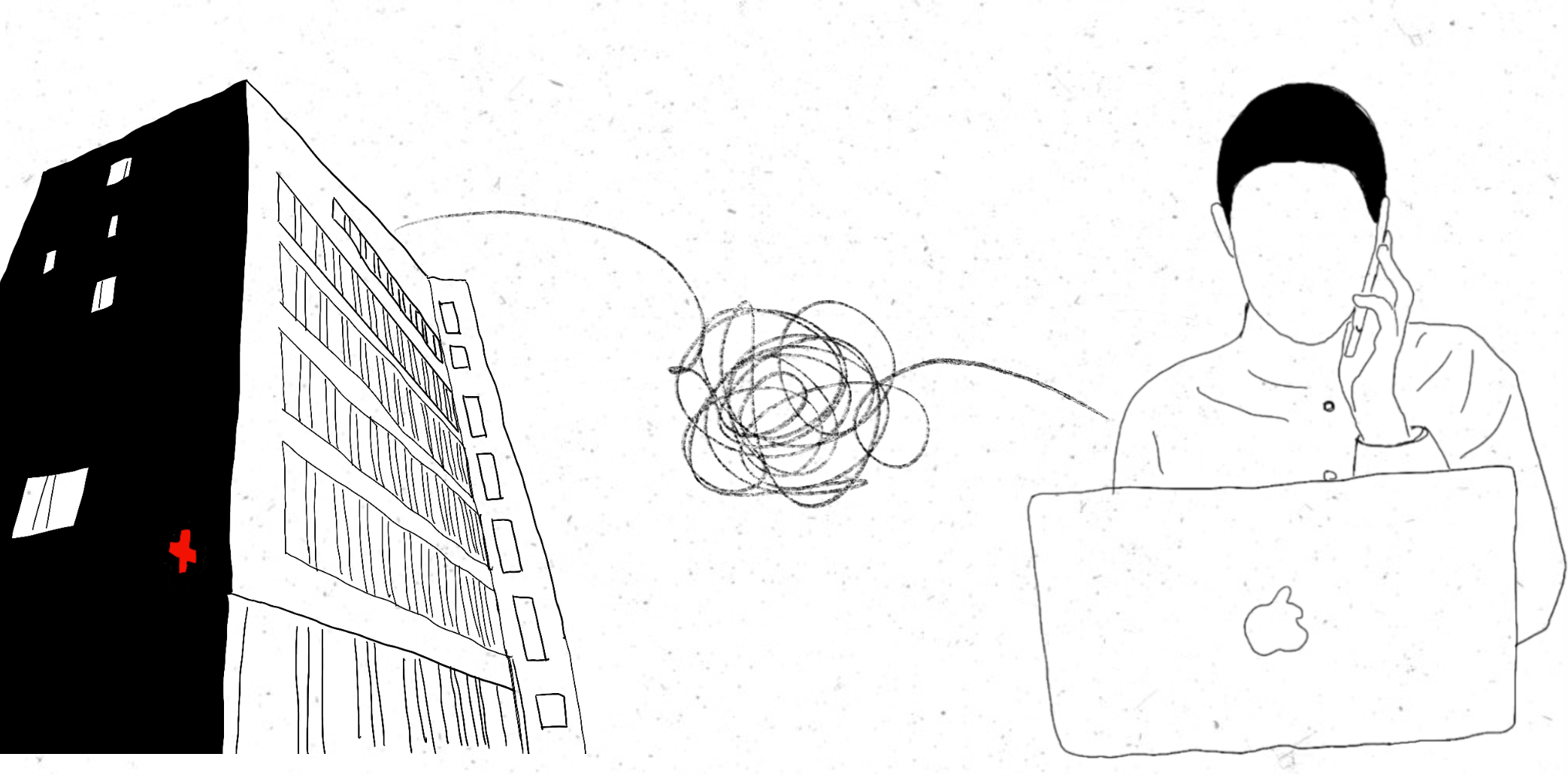
“I was on the brink of a mental breakdown,” Xia said in Mandarin. “I’ve done everything I could as a daughter.”
Xia, eight-months pregnant and living in San Francisco at the time, spent up to eight hours of her day on the phone with her mom, the doctors and nurses in a city near Shanghai. She couldn’t travel back herself because of her pregnancy and travel restrictions. All she could do was provide care and emotional support, thousands of miles away.
Seeing her parents’ health deteriorating but unable to be by their side has been excruciating.
“I feel like a hamster on a running wheel,” Summer said. “No matter how hard I try, I am still in the exact same place.”
She wondered, if she had moved her parents to San Francisco the year before, would everything be different?
Unlike Xia whose plan to help her parents move to the U.S. was stalled by the pandemic, many young Chinese immigrants have moved their aging parents to the U.S.
Some believe America has world-class medical experts and would be able to provide better care to their parents, despite obstacles to finding reliable and affordable healthcare plans. Others simply think it helps to be living close to each other as their parents age.
As a generation who didn’t have access to foreign language education when they were in school (if they went to school at all), most Chinese seniors don’t speak English.
Mingshan Liu, from Ma’an Shan, a city just about 30 miles from Nanjing on the east coast of China, never had the chance to learn much English when he was in school.
He grew up around the Ma’anshan Iron & Steel Co., and in 1978, he attended the factory-run high school, where workers teach what they know to students. It was only the previous year when China resumed Gaokao (the National College Entrance Examination) after the Cultural Revolution, when there was a dearth of formal education. So there weren’t really many English teachers, Liu said in Mandarin.
Liu, 62, arrived in the Bay Area last December and has since stayed with his son and daughter-in-law in their Silicon Valley home, where the young couple used their “fancy kitchen appliances,” as Liu called. “I don’t understand the English words on those so I couldn’t really operate them well,” he said.
Liu has started participating in English as a Second Language programs. “Right now I’m only in my 60s, I can still go to school and learn,” Liu said. “Just English for daily life is good enough.”
With their children busy with work during the week, Chinese seniors also face the need for a social life outside of their family members. More than 585,000 people living in the Bay Area speak Chinese at home, according to the American Community Survey estimates in 2021. But even without language barriers, genuine connections don’t always come naturally.
Mr. Liang, an active person who loves jogging, cycling and winter swimming, talked fondly about his retirement life with a group of close friends in China. Liang, who preferred to go by only his last name, moved to Campbell, California, last December, where his daughter and her newborn live.
He misses winter swimming with his friends in Zhejiang Province, the hesitation before submerging himself in the freezing water and the exhilaration after, feeling all the blood in his body flowing to the heart. Winter swimming is not a solo sport, Liang said. His group of friends always looks out for each other.
“When swimming in the lake in the winter, someone has to break the ice for you,” he explained. “Otherwise the ice scratches your skin and there will be scars all over.”
Now, his day starts around 8 a.m. at his daughter’s house. He spends the morning looking after his grandchild, and in the afternoon he sometimes walks a couple of miles to the nearby park for a jog.
“The friends back home, we all grew up in the 1970s after the Cultural Revolution. We have a common language,” Liang said. “Here, you throw away all your past and start all over.”
Unlike early Chinese immigrants who had no choice but join their relatives in Chinatowns, many new Chinese elder immigrants come to the U.S. without concerns about poverty and can live with their adult children in suburban Silicon Valley homes. However, a lack of reliable public transportation in these middle-class neighborhoods makes it difficult to get around and socialize with other people.
“The more you have an area like that, the less connected it is with public transportation to areas that might have centers where older people would find other individuals to spend time with, making it harder to find places to have those physical connections,” said Newendorp.
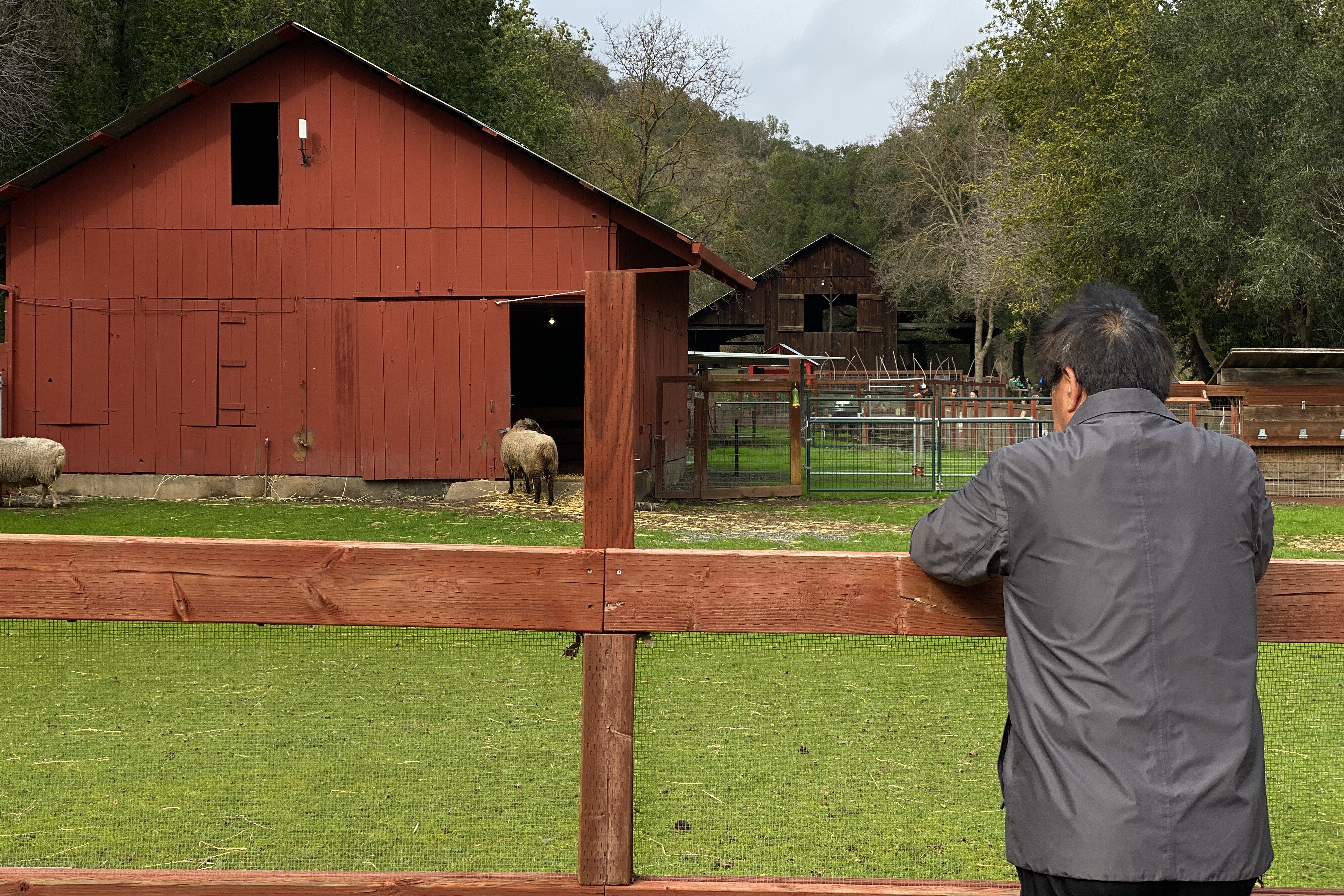
Although BART and buses are available in the Bay Area, taking public transit seems intimidating due to their limited language proficiency, and many feel unsafe riding public transportation alone. Many seniors don’t drive, so they rely on their children to drive them around. When their children are busy with work, they may choose not to travel anywhere for fear of becoming a burden for their kids.
Location and access to transportation are the things that “may make the biggest difference in terms of crafting a sense of community,” said Newendorp.
Some of her interviewees in the Boston area spend two hours on a bus each day to travel from their suburban home to Boston’s Chinatown to spend the day doing volunteer work, hoping to grasp a sense of community.
The same happens in the Bay Area. Hong Lok Senior Centers, a senior program in Oakland’s Chinatown that serves more than 300 seniors, has seen clients traveling from Fremont to Oakland, just to spend some time at the center playing chess with friends or taking on volunteer work, according to Helen Lim, the program manager who has worked there for more than 20 years.
As Chinese seniors navigate their transition to American life, most stay with their grown children before they can afford to rent or buy their own place. Sharing space with multiple family members, however, brings about tensions, a collision of values, and burnout for both the elderly and the younger generations. Many elders feel a strong sense of “jì-rén-lí-xià” (寄人篱下) or living under someone else’s roof, a Chinese cultural concept that carries a sense of dependence, indebtedness and obligation.
Mrs. Ma, a 60-year-old woman from Beijing, has been living with her daughter and son-in-law since May 2022. She refused to disclose her first name due to privacy concerns.
Her room is right next to the bathroom, with a thin wall in between. She likes to go to bed around 10 p.m., but her son-in-law usually takes his shower at the same time. Many times she would lie in bed, she said, listening to the water splashing against the bathroom floor, and unable to sleep.
“I don’t have a home here,” Ma said. “I can’t treat someone else’s home as my own home.”
Like many, she consoles herself with the knowledge that she is needed to take care of her grandchildren. During her time in the U.S., she tried to take on a lot of responsibilities to help her daughter with childcare. But that duty is temporary.
“If they end up coming to help raise the grandchildren, once the grandchildren are in school, they are lost, they no longer feel needed and they don’t have a place to go,” said Heying Zhan, associate professor at the Department of Sociology, Georgia State University who published a study on the process of settlement of Chinese elder immigrants in 2019.
When speaking with Chinese senior migrants about their lives in the U.S. and back home, many bring up the idea of freedom (“zì-yóu” 自由). However, for different people, freedom could mean very different things.
While younger Chinese immigrants may feel life in the U.S. gives them the freedom to escape from the stricter political control in China, older Chinese people are more likely to see freedom as independence from others, being mobile and doing things on their own. They don’t necessarily feel as much freedom in the U.S. as they do in China, where they can go on road trips with friends, take classes in senior universities and most importantly, take care of themselves without the help from their adult children.
“People had a spectrum of ideas around what they wanted out of being here, why it was meaningful for them to be here,” said Newendorp. “But this idea of independence, I think, is one that was important.”
For Ma, her time in the U.S. left her burned out from taking care of everything at home. In April, Ma moved back to Beijing indefinitely. After nearly a year of staying in the U.S., she still finds retirement life back home much more liberating.
“Of course I have more freedom in China,” Ma said. “In the U.S. I’m mostly living for them. But in China, I’m only living for myself.”